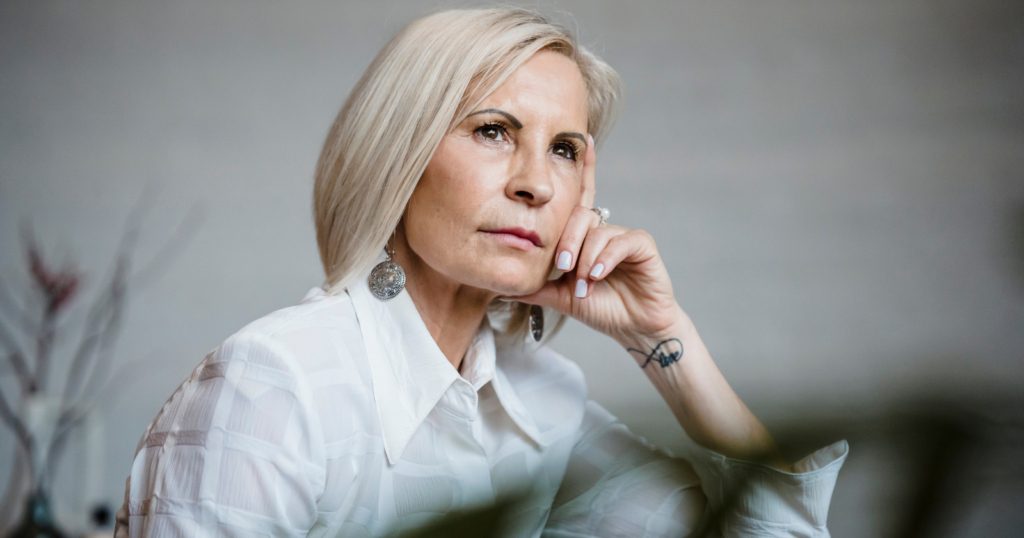
When Evelyn turned 85, she’d been managing her husband’s Alzheimer’s care for seven years. She lifted him from bed each morning, administered medications, handled their finances, and maintained their home—all while dealing with her own arthritis. At the family gathering, her son praised his brother for being “mentally tough” after surviving a difficult divorce. Evelyn listened quietly, wondering when anyone had ever called her tough for enduring decades of silent sacrifice.

Her experience isn’t unique. It reflects a generational reality where women’s resilience was treated as ordinary expectation rather than extraordinary strength.
This linguistic divide reveals something profound about how society has historically viewed women’s endurance versus men’s. The words we use—or don’t use—shape not only recognition but also self-perception and societal value systems.

The Language That Shaped a Generation
For women born between 1940 and 1970, emotional and physical resilience was rarely celebrated with the same vocabulary reserved for men. While men who overcame challenges were described as “mentally tough,” “strong,” or “warriors,” women displaying identical qualities were simply “managing well” or “getting by.”
This wasn’t accidental. The terminology reflected deeply embedded cultural expectations about gender roles and emotional labor.

Women were expected to be resilient by default, so acknowledging that resilience felt redundant to many people. It was like praising someone for breathing.
— Dr. Patricia Martinez, Gender Studies Professor

The impact extended beyond mere words. When society doesn’t name something, it becomes invisible. Women internalized the message that their endurance was ordinary rather than remarkable, affecting everything from career advancement to mental health support.
Consider the different reactions to similar situations: A man caring for aging parents while working full-time was admired for his dedication. A woman doing the same was fulfilling expected duties. The man received praise for being “strong under pressure.” The woman was simply “coping.”

Breaking Down the Recognition Gap
The disparity in recognition created measurable differences in how challenges were perceived and addressed. Here’s how language shaped reality across key areas:
| Situation | Men’s Recognition | Women’s Recognition |
|---|---|---|
| Single parenting | “Dedicated father,” “stepping up” | “Doing what mothers do” |
| Workplace pressure | “Tough under fire” | “Handles stress well” |
| Family caregiving | “Selfless dedication” | “Natural nurturing” |
| Financial hardship | “Fighting through adversity” | “Making ends meet” |
| Health challenges | “Warrior mentality” | “Staying positive” |
The consequences rippled through multiple aspects of women’s lives:
- Career advancement suffered when leadership qualities went unrecognized
- Mental health resources were less likely to be sought or offered
- Self-advocacy became more difficult without language to describe their strength
- Burnout was normalized rather than addressed as a serious concern
- Financial recognition for emotional labor remained minimal
When we don’t have words to describe women’s mental toughness, we can’t properly address the toll it takes or provide appropriate support systems.
— Dr. James Chen, Workplace Psychology Researcher
The Real-World Cost of Invisible Strength
This linguistic gap created tangible consequences that affected millions of women’s lives, careers, and well-being. In workplaces, women’s ability to handle multiple pressures was taken for granted rather than rewarded with promotions or recognition.
Healthcare providers often dismissed women’s stress-related symptoms as normal responses rather than signs of being pushed beyond healthy limits. The phrase “she’s handling it well” became code for “no intervention needed,” even when support was desperately required.
Family dynamics reinforced these patterns. Women became the default choice for additional responsibilities because they were seen as naturally capable rather than choosing to be strong. This created cycles where more was continually expected without corresponding appreciation or compensation.
The assumption that women are just naturally good at handling stress meant we never questioned whether they should have to handle so much of it alone.
— Dr. Rachel Thompson, Family Systems Therapist
Financial implications were equally significant. Emotional labor—managing family schedules, maintaining relationships, handling household crises—was unpaid and unrecognized work that often limited women’s ability to pursue higher-paying opportunities.
The mental health impact cannot be overstated. Without language to describe their resilience as strength rather than expectation, many women struggled to recognize when they were being pushed beyond reasonable limits.
Today’s conversations about mental toughness increasingly recognize these historical blind spots. Younger generations are more likely to use strength-based language when describing women’s resilience, but the effects of decades of linguistic dismissal continue to influence how women view and advocate for themselves.
Changing the language is just the first step. We also need to change the systems that made that language seem normal in the first place.
— Dr. Maria Santos, Social Psychology Institute
The shift requires conscious effort to recognize and name women’s mental toughness when we see it, to question whose strength gets celebrated and whose gets ignored, and to ensure that resilience is supported rather than simply expected.
Understanding this historical pattern helps explain why many women struggle with imposter syndrome, difficulty self-advocating, and reluctance to seek help during challenging times. The words we use matter because they shape the reality we create and the support we provide.
FAQs
Why weren’t women called mentally tough in previous generations?
Society expected women to be resilient by default, so their strength was seen as natural rather than noteworthy, while men’s toughness was viewed as an achievement worth celebrating.
How did this language difference affect women’s careers?
Without recognition for their mental toughness, women’s leadership qualities were often overlooked, limiting advancement opportunities and professional recognition.
Is this linguistic gap still present today?
While improving, disparities still exist in how men’s and women’s resilience is described and valued, though younger generations are more aware of these patterns.
What were the mental health consequences of this recognition gap?
Many women struggled to recognize when they were overwhelmed because their stress was normalized rather than addressed as a sign they needed support.
How can we change these linguistic patterns?
Consciously using strength-based language when describing women’s resilience, questioning whose toughness gets celebrated, and providing support rather than just expecting endurance.
Did this affect how women saw themselves?
Yes, many internalized the message that their resilience was ordinary rather than extraordinary, making self-advocacy and help-seeking more difficult.
Leave a Reply