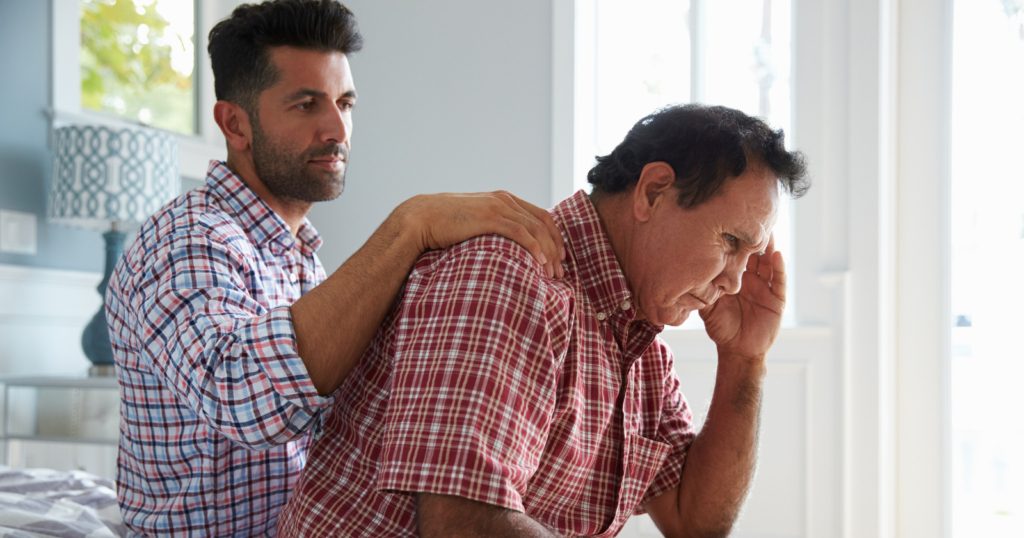
Eighty-two-year-old Vernon sits in his favorite recliner, staring at his phone for the third time today. Three missed calls from his daughter, but he won’t call back. “Don’t want to be a burden,” he mutters to his empty living room, the same words he’s been saying for months now.

His daughter lives just twenty minutes away, but it might as well be twenty states. When she does visit, their conversations feel stilted, awkward. She asks if he needs anything, he says he’s fine. She mentions he seems lonely, he changes the subject. It’s a dance they both know by heart—one that’s playing out in millions of homes across America.
Vernon represents something unprecedented in American history: the loneliest generation we’ve ever seen. And the cruel irony? The very people who raised their children to be tough, independent, and emotionally self-reliant are now suffering from the exact coping mechanisms they instilled.

When “Toughen Up” Becomes a Prison
Baby Boomers, born between 1946 and 1964, are experiencing loneliness at rates that would have been unimaginable just a generation ago. Recent studies show that over 35% of adults over 65 report chronic loneliness, with the numbers climbing higher each year.
But this isn’t just about getting older. This is about a generation that built their entire emotional framework around self-sufficiency, stoicism, and the belief that asking for help is a sign of weakness.

“We’re seeing the long-term consequences of emotional suppression playing out in real time. The generation that told their kids to ‘walk it off’ literally doesn’t know how to reach out when they’re hurting.”
— Dr. Amanda Richardson, Geriatric Psychology Specialist

Think about the messages this generation grew up with: “Big boys don’t cry.” “Pull yourself up by your bootstraps.” “Don’t air your dirty laundry.” These weren’t just casual sayings—they became the foundation of how an entire generation learned to navigate the world.
Now, as they face retirement, health challenges, and the natural social isolation that comes with aging, they’re discovering that their emotional toolkit is surprisingly empty. The very strength that got them through decades of hard work and family responsibilities has become a barrier to connection.

The Numbers Tell a Heartbreaking Story
The statistics around senior loneliness aren’t just numbers—they represent millions of individual stories like Vernon’s. Here’s what the research reveals:
| Age Group | Chronic Loneliness Rate | Weekly Social Interaction |
|---|---|---|
| 65-74 years | 32% | Less than 2 hours |
| 75-84 years | 41% | Less than 1 hour |
| 85+ years | 56% | Less than 30 minutes |
The factors contributing to this crisis include:
- Loss of spouse and longtime friends
- Physical limitations that reduce mobility
- Technology gaps that limit digital connection
- Geographic distance from adult children
- Reluctance to express emotional needs
- Pride that prevents accepting help
“The irony is devastating. They raised emotionally independent children who respect their parents’ autonomy—sometimes to a fault. Everyone’s waiting for someone else to make the first move.”
— Maria Santos, Family Therapist
What makes this particularly tragic is that their adult children often want to help but don’t know how to break through the emotional walls their parents taught them to respect. It’s a standoff built on decades of learned behavior.
When Strength Becomes Isolation
The coping mechanisms that served this generation well during their working years—emotional self-reliance, problem-solving independence, and stoic endurance—are now working against them in retirement.
Take Dorothy, a 78-year-old widow whose husband passed two years ago. She raised four successful children who all live within driving distance. Yet she spends most days alone, declining invitations and insisting she’s “doing just fine” when anyone asks.
“I don’t want to be a burden” has become the unofficial motto of an entire generation. But what they don’t realize is that their emotional distance is creating a different kind of burden—the helpless frustration their children feel watching their parents struggle in isolation.
“Adult children tell me they feel like they’re constantly walking on eggshells, trying to offer support without triggering their parent’s defensive independence. It’s exhausting for everyone involved.”
— Dr. James Mitchell, Family Counselor
The problem runs deeper than just asking for help. This generation often lacks the vocabulary for emotional expression that younger generations take for granted. They weren’t taught to identify feelings beyond “fine” or “not fine,” making it nearly impossible to articulate what they actually need.
Meanwhile, their adult children—raised to respect boundaries and independence—often interpret their parents’ “I’m fine” at face value, not recognizing it as a cry for help disguised as self-sufficiency.
Breaking the Cycle
The solution isn’t simple, but it starts with recognition. Families need to understand that traditional approaches to checking in may not work with parents who’ve spent decades perfecting the art of emotional self-containment.
Some strategies that are showing promise include:
- Regular, low-pressure activities rather than “check-in” calls
- Involving seniors in family decisions to maintain their sense of purpose
- Creating structured social opportunities that don’t feel like charity
- Teaching technology skills to bridge communication gaps
- Professional counseling specifically designed for seniors
“The key is finding ways to connect that honor their need for dignity while addressing their human need for companionship. It’s possible, but it requires patience and creativity.”
— Lisa Chen, Senior Services Coordinator
Communities are also stepping up with programs designed specifically for this challenge—senior centers that focus on purpose rather than entertainment, intergenerational programs that give older adults meaningful roles, and mental health services that understand the unique barriers this generation faces.
But perhaps the most important step is simply acknowledging the problem. The generation that sacrificed emotional expression for strength deserves our understanding, not our judgment. They’re not being stubborn—they’re doing exactly what they were taught to do. Now it’s time for all of us to learn new ways to connect across the emotional divide they never meant to create.
FAQs
Why are Baby Boomers lonelier than previous generations of seniors?
They were raised with strong emphasis on emotional independence and self-reliance, making it difficult to reach out for help or express vulnerability as they age.
How can adult children help lonely parents who won’t admit they need support?
Focus on regular, low-pressure activities rather than direct offers of help, and look for ways to involve them in family decisions to maintain their sense of purpose.
What’s the difference between normal aging isolation and problematic loneliness?
Problematic loneliness involves chronic emotional distress, withdrawal from previously enjoyed activities, and reluctance to maintain relationships that were once important.
Are there professional resources specifically for seniors struggling with loneliness?
Yes, many communities now offer senior-focused counseling, social programs, and support groups designed to address the unique challenges this generation faces.
How does technology factor into senior loneliness?
Many seniors feel left behind by digital communication methods their families use, creating additional barriers to staying connected with loved ones.
Can this pattern of loneliness be prevented in future generations?
Yes, by teaching emotional literacy alongside independence, and by modeling healthy help-seeking behaviors for our own children.
Leave a Reply