
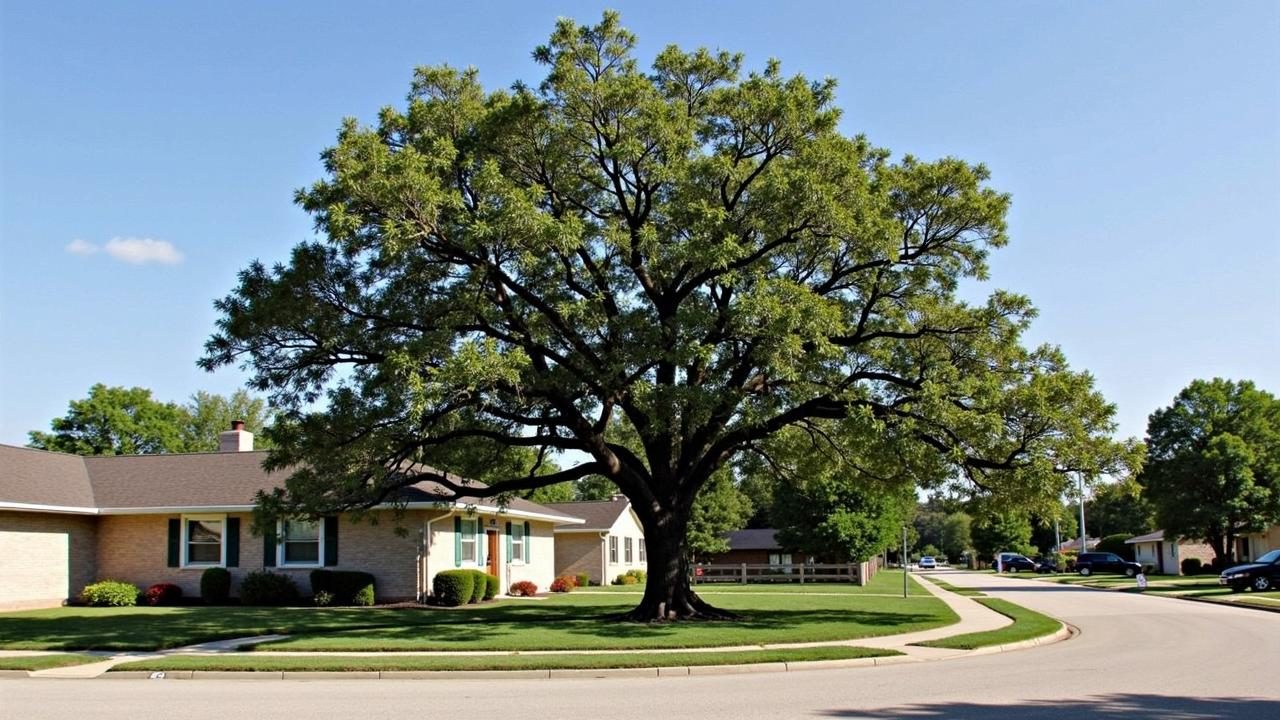
Eighty-seven-year-old Vernon Hutchins pressed his weathered palm against the massive trunk, feeling the deep grooves of bark that had weathered nearly two centuries of storms. “This tree was here when my great-grandfather built his first house on Maple Street,” he whispered to his neighbor. “Now they want to cut her down like she’s nothing.”
Three houses down, Rebecca Chen was having a very different conversation with the city arborist. “That branch is hanging directly over my daughter’s bedroom window,” she said, pointing upward. “One strong wind, and we could be looking at a tragedy.”
Welcome to the great oak tree wars of suburban America, where century-old trees become the unlikely battlegrounds for property values, safety concerns, and deeply personal attachments that can turn friendly neighbors into bitter enemies.
When Heritage Meets Reality
Neighborhood disputes over aging trees are erupting across the country as communities grapple with a perfect storm of competing interests. These aren’t just arguments about landscaping—they’re emotional battles that touch on everything from property rights to environmental stewardship to childhood memories.
The typical scenario plays out predictably: a majestic old tree begins showing signs of decline or disease. Some residents see a beloved landmark that defines their neighborhood’s character. Others see a lawsuit waiting to happen. And inevitably, someone sees an opportunity to assert control over decisions that affect everyone.
“I’ve mediated hundreds of these disputes, and they’re never really about the tree,” says conflict resolution specialist Dr. Amanda Torres. “They’re about power, belonging, and different ideas of what makes a community safe and beautiful.”
— Dr. Amanda Torres, Community Mediation Expert
The financial stakes can be enormous. A mature oak tree can add $10,000 to $15,000 to property values when healthy, but liability for damage from falling branches or roots can reach six figures. Insurance companies are increasingly scrutinizing homeowners’ policies for tree-related risks, creating pressure to remove anything that might cause future problems.
The Real Costs of Tree Conflicts
These disputes rarely stay simple for long. What starts as a conversation between neighbors quickly escalates into city council meetings, legal consultations, and sometimes years-long feuds that poison community relationships.
Here’s what’s typically at stake in neighborhood tree battles:
- Financial impact: Tree removal costs $500-$3,000, while major pruning runs $200-$800 annually
- Property values: Mature trees can increase home values by 7-19% when healthy
- Insurance concerns: Liability coverage may be affected by proximity to large trees
- Legal fees: Tree disputes that reach court average $5,000-$15,000 in legal costs
- Environmental loss: A single mature oak absorbs 48 pounds of CO2 annually
- Emotional toll: Neighborhood relationships can be permanently damaged
| Tree Age | Typical Issues | Average Resolution Time | Cost Range |
|---|---|---|---|
| 50-75 years | Root damage, branch concerns | 2-6 months | $800-$2,500 |
| 75-100 years | Disease, structural problems | 6-12 months | $1,500-$5,000 |
| 100+ years | Heritage protection vs. safety | 1-3 years | $3,000-$15,000 |
“The older the tree, the more emotional the attachment becomes. I’ve seen grown men cry over oak trees that were planted by their grandfathers.”
— Marcus Rodriguez, Certified Arborist
Who Really Gets Hurt
The human cost of these conflicts extends far beyond the immediate neighbors. Children lose beloved climbing trees and natural playgrounds. Elderly residents watch landmarks from their youth disappear. Wildlife loses habitat that took decades to establish.
But the safety concerns aren’t imaginary either. Tree-related property damage affects 25% of homeowners at some point, and falling branches cause dozens of serious injuries annually. The challenge is distinguishing between genuine hazards and anxiety-driven overreactions.
Property managers and HOA boards find themselves caught in the middle, trying to balance legitimate safety concerns with preservation of neighborhood character. Many report that tree disputes consume more time and resources than any other single issue.
“We’ve had neighbors stop speaking to each other for years over a tree. It affects the whole street when people are that angry with each other.”
— Jennifer Walsh, HOA Board Member
The generational divide is particularly sharp. Older residents often have deep emotional connections to trees they’ve watched grow for decades, while younger families focus more on safety and liability concerns. Social media has amplified these conflicts, with neighborhood Facebook groups becoming battlegrounds for competing tree philosophies.
Finding Common Ground
Despite the heated emotions, most tree disputes can be resolved when neighbors focus on shared interests rather than competing positions. Professional arborists, mediation services, and city forestry departments have developed strategies that address both safety and preservation concerns.
The most successful resolutions typically involve compromise solutions: strategic pruning instead of removal, shared costs for professional maintenance, or replanting agreements that satisfy both safety and aesthetic concerns.
“When neighbors work together on tree care instead of fighting over tree removal, everyone wins. The tree stays healthier, the costs are shared, and relationships actually improve.”
— David Kim, Urban Forestry Coordinator
Some communities have established tree preservation funds that help cover the cost of professional care for significant neighborhood trees. Others have created formal processes for evaluating tree health and safety that take emotion out of the decision-making process.
The key is early intervention. Once positions harden and lawyers get involved, finding mutually acceptable solutions becomes much more difficult and expensive.
FAQs
Who is legally responsible for tree maintenance in neighborhoods?
Generally, the property owner where the tree’s trunk is located is responsible, even if branches extend over neighboring properties.
Can neighbors force removal of a tree they consider dangerous?
Neighbors can request city inspection if they believe a tree poses genuine safety hazards, but removal typically requires official determination of imminent danger.
How much does professional tree assessment cost?
Certified arborist evaluations typically cost $200-$500, but many cities provide free assessments for potential hazard trees.
What’s the best way to approach neighbors about tree concerns?
Start with friendly conversation focusing on shared interests like safety and property values, and suggest professional evaluation before proposing solutions.
Are there legal protections for historic or significant trees?
Many communities have tree preservation ordinances that protect significant trees, requiring permits and sometimes prohibiting removal of healthy specimens over certain sizes.
How can neighborhoods prevent tree disputes from escalating?
Establish clear communication channels, involve neutral experts early, and focus on collaborative solutions rather than competing positions.