Eighty-two-year-old Vernon sits in his hospital bed, tubes connected to his arm, stubbornly refusing to press the call button even though he’s been in pain for hours. When his daughter asks why he won’t call the nurse, he just shakes his head. “I can handle it,” he mutters, the same words he’s been saying since he was eight years old and learned to make his own breakfast because nobody else would.
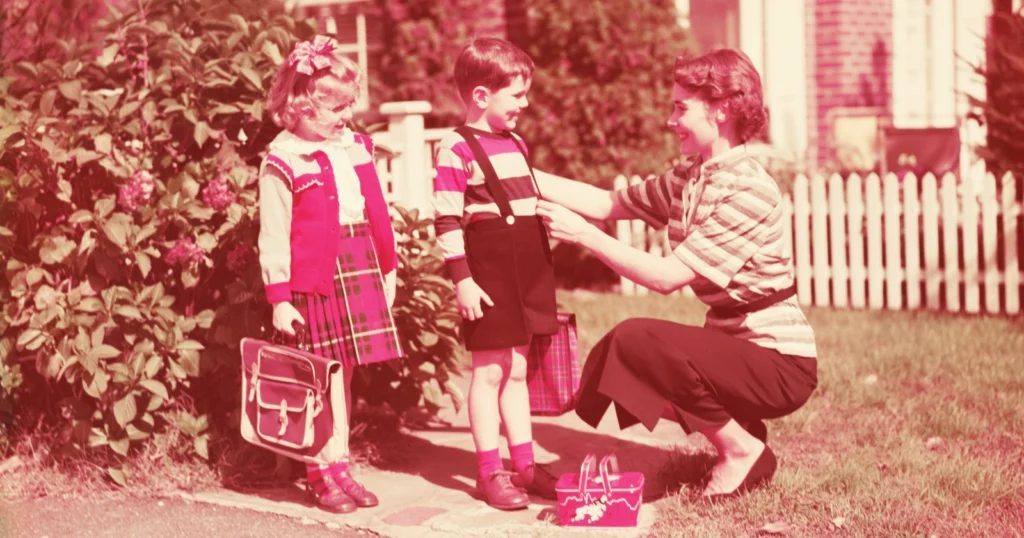
This scene plays out in hospitals, homes, and communities across America every day. An entire generation of people who learned early that asking for help wasn’t just discouraged—it was pointless.
The children who grew up in the 1960s and 70s didn’t choose to become tough. They were forged by a world that handed out harsh lessons without warning labels or safety nets, creating a generation whose nervous systems are still wired for self-reliance decades later.

When Childhood Meant Learning Hard Lessons Fast
The world of the 1960s and 70s operated on a fundamentally different premise than today. Children were expected to figure things out on their own, often through trial and error that could have real consequences.
Parents worked long hours with less flexibility, leaving kids to navigate everything from playground bullies to household emergencies without adult intervention. There were no participation trophies, no extensive safety protocols, and definitely no helicopter parenting.

The brain development that happens between ages 8-12 is crucial for forming our core survival strategies. When children consistently learn that help isn’t coming, their nervous systems adapt accordingly.
— Dr. Patricia Hendricks, Developmental Psychologist

By age twelve, most kids from this era had internalized a powerful message: you’re on your own. This wasn’t necessarily because their parents were uncaring, but because the social structure assumed children would naturally develop independence through experience.
The result? A generation that learned to solve problems, endure discomfort, and push through challenges without expecting rescue or even acknowledgment.

How Tough Was Too Tough? The Real Price of Early Independence
The toughness that defined this generation came with specific characteristics that psychology now recognizes as both strengths and limitations:
- Extreme self-reliance: Solving problems alone became the default mode
- High pain tolerance: Physical and emotional discomfort was simply endured
- Distrust of dependency: Needing help felt like weakness or failure
- Hypervigilance: Constant scanning for potential problems or threats
- Emotional compartmentalization: Feelings were pushed aside to focus on survival
These adaptations served them well in many situations. This generation built careers, raised families, and weathered economic storms with remarkable resilience.
What we’re seeing now is that the same neural pathways that helped them survive childhood are making it nearly impossible for them to accept help as seniors. Their brains literally interpret assistance as danger.
— Dr. Michael Torres, Geriatric Psychology Specialist
But the cost of this early programming is becoming clear as this generation ages. The same mechanisms that made them tough are now preventing them from accessing support when they genuinely need it.
| Age Range | Common Challenges | Help-Seeking Behavior |
|---|---|---|
| 60-65 | Health issues emerging | Minimizes symptoms, delays medical care |
| 66-75 | Mobility limitations | Refuses assistive devices, avoids asking family for help |
| 76-85 | Significant health decline | Resists home care, fights nursing home placement |
| 85+ | Daily living assistance needed | May accept help but feels deep shame and frustration |
The Invisible Struggle of a Self-Sufficient Generation
Today, millions of people in their 60s, 70s, and 80s are quietly struggling with challenges that could be significantly eased with support. Yet their early programming makes accepting help feel like a fundamental threat to their identity.
This shows up in countless ways: the grandfather who won’t use a walker despite multiple falls, the grandmother who insists on driving when her vision is failing, the parent who hides financial struggles rather than discussing them with adult children.
I see patients who would literally rather risk serious injury than admit they need assistance with basic tasks. It’s not stubbornness in the traditional sense—it’s a deeply ingrained survival mechanism.
— Dr. Sarah Chen, Family Medicine Physician
Family members often interpret this behavior as stubbornness or pride, not recognizing that their loved one’s nervous system is responding to offers of help as if they were threats. The twelve-year-old who learned that “nobody’s coming to save you” is still very much alive inside the seventy-year-old body.
Healthcare systems struggle with this population because traditional approaches assume patients will communicate their needs and accept recommended interventions. But for people whose foundational experience taught them that expressing needs was pointless or dangerous, this expectation creates an impossible conflict.
Breaking Sixty Years of Programming
Understanding this generational pattern doesn’t mean accepting it as unchangeable. Recognizing that this “toughness” was a necessary adaptation rather than a character flaw opens up possibilities for compassionate intervention.
Adult children can reframe their approach by acknowledging their parent’s competence while gradually introducing support as practical problem-solving rather than caregiving. Instead of “Let me help you,” try “I noticed this tool that might make that job easier.”
The key is working with their existing neural pathways rather than against them. Frame assistance as efficiency or practical solutions, not as help for someone who can’t cope.
— Dr. Robert Martinez, Behavioral Health Counselor
Healthcare providers are beginning to understand that this population needs different communication strategies. Direct questions about pain or limitations may be met with automatic minimization, while observational assessments and family input provide more accurate pictures of actual needs.
The generation that learned early to expect no rescue created remarkable resilience. But now, as they face the natural challenges of aging, their greatest strength has become their greatest vulnerability. Understanding this paradox is the first step toward helping them navigate this final chapter with the same courage they’ve shown throughout their lives—but with the support they’ve always deserved.
FAQs
Why can’t older adults from this generation just choose to accept help?
Their early experiences literally rewired their nervous systems to interpret help-seeking as dangerous, making it an unconscious survival response rather than a conscious choice.
Is this pattern the same for everyone who grew up in the 1960s and 70s?
While common, individual experiences varied significantly based on family dynamics, socioeconomic factors, and personal circumstances.
How can family members best support parents who won’t accept help?
Frame assistance as practical solutions or efficiency improvements rather than help for someone who can’t manage independently.
Will future generations have this same problem?
Unlikely to the same degree, as parenting styles and social safety nets have evolved to provide more support and validation for children’s emotional needs.
Can therapy help older adults learn to accept assistance?
Yes, but it requires therapists who understand generational trauma and can work within existing neural patterns rather than trying to completely reprogram them.
What are the signs that someone from this generation needs help but won’t ask?
Look for declining hygiene, home maintenance issues, weight loss, increased isolation, or minor injuries that suggest mobility or safety problems.
Leave a Reply