
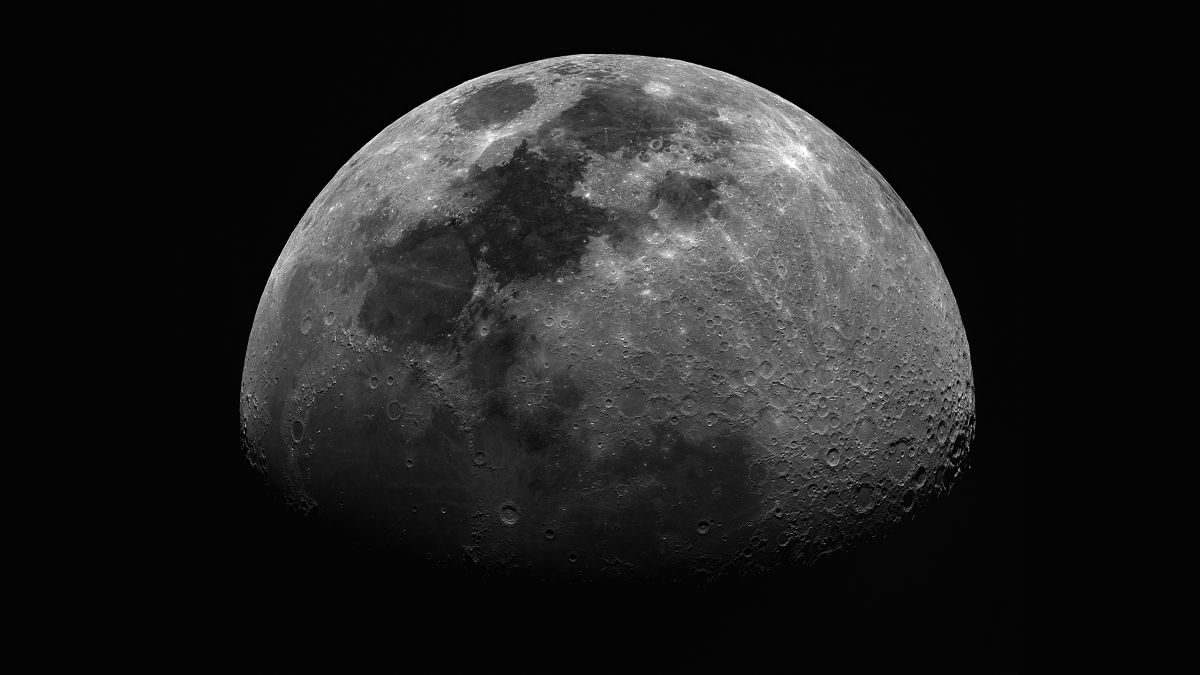
Dr. Elena Vasquez was reviewing seismic data from the Apollo missions late one evening when something made her pause. The readings she was analyzing weren’t from Earth—they were from our moon. And what she saw challenged everything scientists thought they knew about lunar activity.
“I had to double-check the instruments three times,” she recalls. “The moon was supposed to be geologically dead, but these readings told a completely different story.”
What Dr. Vasquez discovered that night has now been confirmed by researchers worldwide: moonquakes are far more widespread and frequent than anyone imagined. Our seemingly peaceful celestial neighbor is actually shaking regularly, and this revelation is reshaping our understanding of lunar geology.
The Moon’s Hidden Seismic Life
For decades, scientists believed the moon was essentially a cold, dead rock floating in space. The Apollo missions detected some seismic activity, but it was dismissed as minimal and insignificant. Recent analysis of both historical data and new observations from modern lunar missions paints a dramatically different picture.
Moonquakes occur with surprising regularity, happening thousands of times more frequently than previously documented. Unlike earthquakes, which typically last seconds or minutes, some moonquakes can continue for over an hour due to the moon’s dry, fractured composition that allows seismic waves to travel much farther.
The moon is basically ringing like a bell when these quakes hit. Without water or atmosphere to dampen the vibrations, the shaking just keeps going and going.
— Dr. Marcus Chen, Lunar Seismologist
These discoveries come from reanalyzing data collected by seismometers placed during Apollo missions 12, 14, 15, and 16, combined with new observations from recent lunar orbiters. Advanced computer modeling has revealed seismic patterns that were invisible to 1970s technology.
Four Types of Moonquakes Shaking Our Satellite
Scientists have identified four distinct categories of lunar seismic activity, each with unique characteristics and causes:
| Type | Depth | Magnitude | Cause |
|---|---|---|---|
| Deep Moonquakes | 700+ km | 1-2 | Earth’s gravitational pull |
| Shallow Moonquakes | 20-30 km | Up to 5.5 | Tidal stress fractures |
| Thermal Moonquakes | Surface level | Less than 1 | Extreme temperature changes |
| Meteorite Impact Quakes | Variable | Variable | Space rock collisions |
The most surprising discovery involves shallow moonquakes, which can reach magnitudes comparable to moderate earthquakes. These occur when the moon’s brittle crust fractures under the stress of Earth’s gravitational forces.
Deep moonquakes follow a predictable 27-day cycle, directly linked to the moon’s orbit around Earth. As our planet’s gravity stretches and compresses lunar rock, it creates internal stress that eventually releases as seismic energy.
What’s fascinating is how predictable some of these patterns are. We can actually forecast when certain types of moonquakes will occur based on orbital mechanics.
— Dr. Sarah Okafor, Planetary Geophysicist
Thermal moonquakes happen during the dramatic temperature swings between lunar day and night. When sunlight hits the moon’s surface, temperatures soar to 250°F (121°C). During the two-week lunar night, they plummet to -250°F (-157°C). This extreme cycling causes rocks to expand and contract, creating fractures and small quakes.
What This Means for Future Moon Missions
These findings have immediate implications for planned lunar bases and long-term human presence on the moon. Engineers designing future habitats now must account for regular seismic activity that could potentially damage equipment or structures.
The good news is that most moonquakes are relatively mild compared to dangerous earthquakes. However, their extended duration and the moon’s lack of atmosphere to dampen vibrations create unique engineering challenges.
- Lunar base foundations will need flexible designs to withstand prolonged shaking
- Sensitive scientific equipment requires specialized shock absorption systems
- Emergency protocols must account for quakes lasting up to an hour
- Construction materials need testing under lunar seismic conditions
NASA and other space agencies are now incorporating this seismic data into their lunar mission planning. The Artemis program, which aims to establish a permanent human presence on the moon, is redesigning habitat specifications based on these discoveries.
We’re essentially starting from scratch with lunar construction standards. Everything from foundation design to equipment mounting has to be reconsidered.
— James Rodriguez, NASA Structural Engineer
A Window Into Lunar History
Beyond practical concerns, widespread moonquakes offer scientists an unprecedented look into the moon’s internal structure and formation history. Seismic waves act like x-rays, revealing hidden layers and composition details impossible to observe from the surface.
The patterns suggest the moon’s interior is far more complex than the simple layered structure scientists once imagined. Evidence points to a partially molten core, active fault systems, and ongoing geological processes that challenge theories about lunar evolution.
Some researchers believe these findings support theories that the moon formed from a massive collision between early Earth and a Mars-sized object called Theia. The seismic activity could be leftover evidence of this violent birth, still playing out billions of years later.
Every moonquake is like a message from the past, telling us something about how our solar system formed. We’re finally learning to read that message clearly.
— Dr. Liu Wei, Comparative Planetologist
Future missions will place more sophisticated seismometers across the lunar surface, creating a network that can pinpoint quake locations with unprecedented accuracy. This seismic mapping will guide selection of the safest sites for permanent bases while revealing the moon’s deepest secrets.
The discovery that our quiet, unchanging moon is actually a seismically active world reminds us how much we still don’t know about our closest celestial neighbor. As we prepare to return humans to the lunar surface, understanding these moonquakes isn’t just scientifically fascinating—it’s essential for keeping future lunar residents safe.
FAQs
Are moonquakes dangerous to astronauts?
Most moonquakes are mild and wouldn’t directly harm astronauts, but their long duration could damage equipment or structures over time.
Why do moonquakes last so much longer than earthquakes?
The moon lacks water and atmosphere to absorb seismic energy, so vibrations continue much longer than on Earth.
Can we predict when moonquakes will happen?
Yes, deep moonquakes follow Earth’s 27-day orbital cycle and are highly predictable, though shallow quakes are less regular.
How strong are the biggest moonquakes?
Shallow moonquakes can reach magnitude 5.5, comparable to moderate earthquakes that cause minor damage on Earth.
Do moonquakes prove the moon is still geologically active?
While not active like Earth, the moon shows more ongoing geological processes than previously thought, challenging the “dead rock” theory.
Will this discovery change plans for lunar bases?
Absolutely—engineers are redesigning habitat foundations and equipment mounting systems to withstand regular seismic activity.