
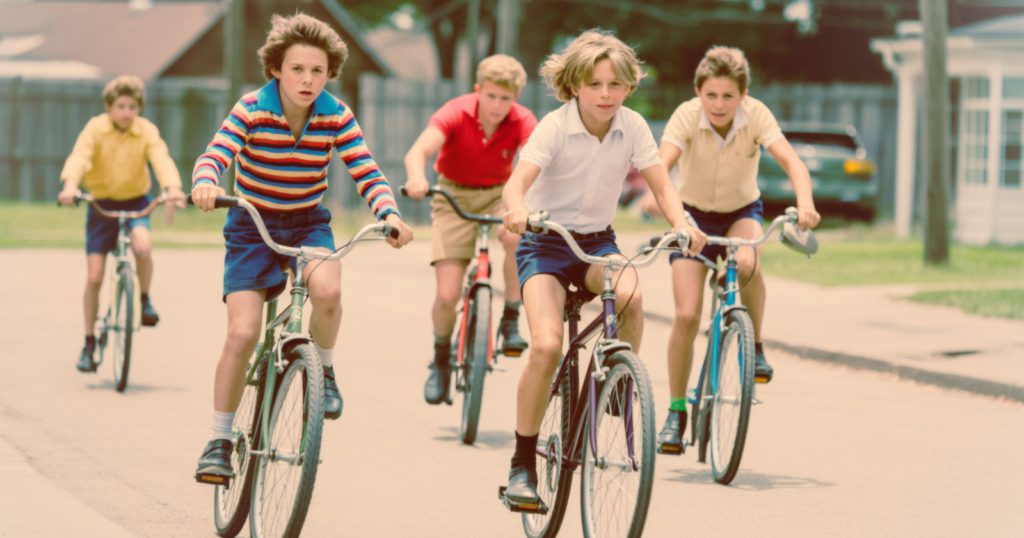
Eighty-two-year-old Vernon sat on his porch, watching his nine-year-old great-grandson struggle to open a slightly stuck gate latch. Instead of figuring it out, the boy immediately called for help. “Grandpa Vernon, it’s broken!” Vernon chuckled, remembering how at that same age, he was fixing bicycle chains with rusty tools and walking miles to school through actual storms.

“Back in my day, we just figured things out,” Vernon muttered, then caught himself using that phrase his own grandfather had used decades earlier. But maybe there was something to it after all.
What Vernon witnessed wasn’t just a generational difference—it was evidence of a profound shift in how we raise children. Psychology research increasingly points to a troubling paradox: today’s kids have access to more resources, opportunities, and safety nets than any generation in history, yet they’re struggling more than ever with basic resilience and the ability to handle life’s inevitable challenges.

The Lost Art of Anti-Fragility
The most valuable lesson from the 1960s and 70s wasn’t any specific skill or piece of knowledge. It was something much more fundamental: the deep-seated belief that you are not fragile. Children of that era grew up with an unspoken understanding that they could handle whatever life threw at them.
This wasn’t about being tough for toughness’s sake. It was about developing what psychologists now call “anti-fragility”—the ability not just to survive difficult situations, but to actually grow stronger from them.

“We’ve accidentally taught an entire generation that they’re made of glass, when humans are actually remarkably resilient by design. The problem isn’t that kids today are weaker—it’s that we’ve systematically convinced them they are.”
— Dr. Patricia Hernandez, Child Development Specialist

Think about the differences in childhood experiences. Kids in the 60s and 70s were expected to walk to school alone, settle their own disputes, and bounce back from failures without extensive intervention. Today’s parents, with the best of intentions, have created elaborate safety nets that often prevent children from developing crucial coping skills.
What We’ve Accidentally Taken Away
The systematic removal of challenge and discomfort from childhood has created some unexpected consequences. Here are the key areas where modern parenting has inadvertently undermined resilience:

- Problem-solving opportunities: Helicopter parenting means kids rarely face problems alone
- Physical risk-taking: Overly safe playgrounds and constant supervision limit natural courage-building
- Emotional discomfort: Rushing to soothe every upset prevents kids from learning self-regulation
- Social conflict resolution: Adults intervening in every peer dispute stops natural social skill development
- Failure experiences: Participation trophies and grade inflation rob kids of learning from setbacks
- Independence milestones: Extended dependence on parents delays confidence-building achievements
| 1970s Childhood Reality | 2020s Childhood Reality | Resilience Impact |
|---|---|---|
| Walk/bike to school alone | Driven to school by parents | Missed independence practice |
| Play unsupervised until dark | Scheduled, supervised activities | Less creative problem-solving |
| Handle peer conflicts independently | Adult mediation for disputes | Weaker social navigation skills |
| Accept “no” as final answer | Negotiate and appeal decisions | Difficulty accepting limits |
| Experience natural consequences | Parents intervene to prevent failure | Less learning from mistakes |
“The irony is heartbreaking. We have more child psychologists, more parenting resources, more safety measures than ever before, yet anxiety and depression rates among young people have skyrocketed. We’re solving the wrong problem.”
— Dr. Marcus Chen, Adolescent Psychology Researcher
The Real-World Cost of Fragility Beliefs
This shift isn’t just theoretical—it’s showing up in concrete ways across society. College counselors report unprecedented demand for mental health services, often for situations that previous generations handled as normal life stress.
Young adults are struggling with basic life transitions like starting college, handling workplace criticism, or navigating romantic relationships. The same generation that can master complex video games and navigate sophisticated technology finds itself overwhelmed by everyday interpersonal challenges.
The workplace impact is particularly striking. Managers report having to provide extensive emotional support for feedback that would have been considered routine coaching just a decade ago. Entry-level employees sometimes require significant hand-holding for normal job responsibilities.
“I’ve had recent college graduates break down in tears over receiving constructive feedback on a project. These are brilliant, capable people who simply never learned that criticism isn’t catastrophic. They have the skills but not the emotional framework to handle normal workplace interactions.”
— Sarah Rodriguez, Corporate Training Director
The dating and relationship landscape tells a similar story. Young adults report feeling overwhelmed by the normal ups and downs of romantic relationships. The same resilience that helped previous generations weather breakups, conflicts, and the general messiness of human connection seems to be missing.
What Anti-Fragile Parenting Actually Looks Like
The solution isn’t to swing back to complete hands-off parenting or to deliberately traumatize children. It’s about thoughtfully reintroducing appropriate challenges and letting kids experience manageable difficulties.
Anti-fragile parenting means resisting the urge to solve every problem for your child. When your teenager faces social drama, instead of calling the school immediately, you help them think through their options. When they struggle with homework, you provide support without doing the work for them.
It means celebrating effort and growth rather than just outcomes. It means letting them experience natural consequences for their choices, within reason. Most importantly, it means consistently communicating the message: “You are capable of handling this.”
“The goal isn’t to make childhood harder—it’s to make adulthood easier. Every small challenge a child overcomes builds their confidence for bigger challenges later. We’re not doing them any favors by removing all obstacles from their path.”
— Dr. Jennifer Walsh, Family Therapist
This approach requires tremendous restraint from parents. It’s emotionally difficult to watch your child struggle, even when you know the struggle is beneficial. But the alternative—sending fragile young adults into an inevitably challenging world—is far worse.
The most valuable gift we can give the next generation isn’t a problem-free childhood. It’s the unshakeable belief in their own resilience, earned through countless small victories over manageable challenges. That’s the lesson from the 60s and 70s worth preserving.
FAQs
Does this mean we should ignore children’s mental health needs?
Absolutely not. Supporting mental health and building resilience go hand in hand—both involve helping children develop healthy coping strategies.
How do I know if I’m being overprotective?
Ask yourself: “Am I solving a problem my child could reasonably handle themselves?” If yes, consider stepping back and offering guidance instead.
What if my child really can’t handle a particular challenge?
Start smaller. Build their confidence with manageable challenges before moving to bigger ones. Every child’s capacity is different.
Isn’t the world more dangerous now than in the 1970s?
Actually, most statistics show children are safer now than in previous decades. Our perception of danger has increased more than actual danger.
How do I balance protection with independence?
Focus on teaching skills rather than removing challenges. Prepare your child for the world instead of trying to prepare the world for your child.
When should I intervene in my child’s problems?
Intervene when there’s genuine danger or when they specifically ask for help after trying themselves. Otherwise, offer support and encouragement from the sidelines.