
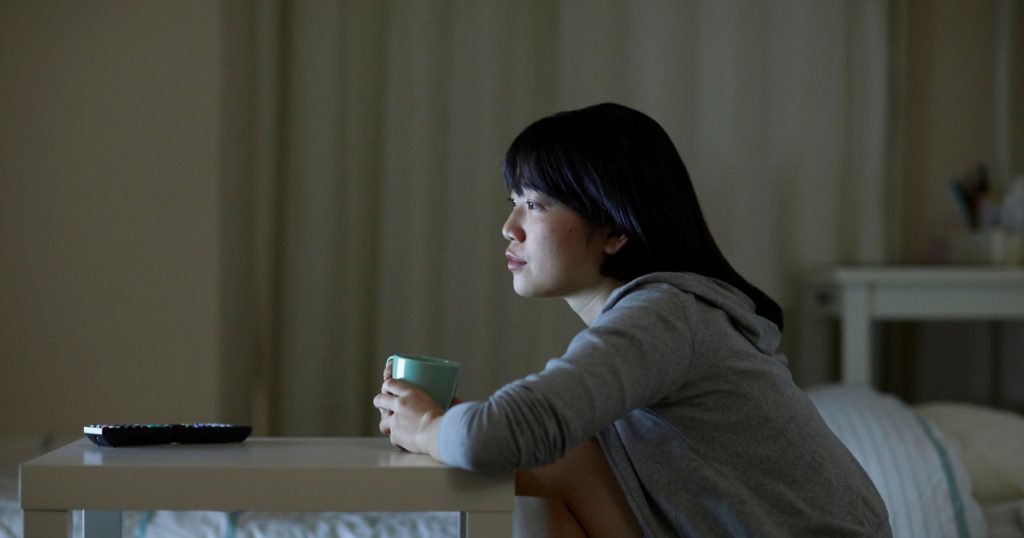
Margaret Hendricks had watched the same late-night talk show reruns for decades. At 62, she knew every Johnny Carson joke by heart, could recite Letterman’s top ten lists, and had seen Jay Leno’s monologue from 1995 at least fifty times. The blue glow of her bedroom television had been her constant companion since her early thirties, a necessary backdrop to sleep that she couldn’t imagine living without.

It wasn’t until her daughter bought her a meditation app for her birthday that Margaret finally understood what she’d been running from all those years. The silence was terrifying—not because it was empty, but because it was full of everything she’d spent three decades drowning out.
Margaret’s story isn’t unique. Millions of Americans have developed a dependency on background noise to fall asleep, with television being the most common choice. What many don’t realize is that this habit often masks deeper issues with anxiety, loneliness, and unprocessed emotions that our minds try to work through during quiet moments.

The Hidden Psychology Behind Needing TV to Sleep
Sleep specialists have long recognized that using television as a sleep aid creates more problems than it solves. The blue light disrupts natural melatonin production, the varying volume levels can fragment sleep cycles, and the content keeps our brains partially engaged when they should be winding down.
But for people like Margaret, the real issue runs deeper than sleep hygiene. The television serves as a buffer against the thoughts, feelings, and memories that surface when our minds finally get quiet.

“When we eliminate distractions, we’re often confronted with emotions or thoughts we’ve been unconsciously avoiding. The TV becomes a form of emotional numbing.”
— Dr. Rachel Chen, Sleep Psychologist

Many people who depend on television for sleep report similar underlying issues: anxiety about the day ahead, regrets about past decisions, grief that was never fully processed, or simply the discomfort of being alone with their own thoughts.
The habit often develops during stressful life periods—job loss, divorce, death of a loved one, or major life transitions. What starts as temporary comfort becomes a decades-long crutch that prevents natural sleep patterns and emotional healing.

What Meditation Reveals That TV Masks
When Margaret first tried meditation, she lasted exactly forty-seven seconds before reaching for the remote. The silence felt overwhelming, almost physically uncomfortable. But her daughter encouraged her to try again, starting with just two minutes at a time.
Over several weeks, Margaret began to notice what emerged in the quiet moments:
- Worry about her aging body and health concerns
- Loneliness following her husband’s death five years earlier
- Regret about career choices she’d made in her forties
- Anxiety about being a burden to her children as she aged
- Grief over friendships that had faded over time
These weren’t necessarily overwhelming emotions—they were normal human concerns that her mind had been trying to process for years. The television had been preventing this natural psychological work from happening.
“Our brains need quiet time to consolidate memories, process emotions, and work through daily stress. When we constantly provide distraction, we interrupt these essential mental processes.”
— Dr. James Morrison, Neuropsychologist
Research shows that people who practice meditation often experience improved emotional regulation, better stress management, and more restorative sleep. The key is learning to sit with uncomfortable feelings rather than immediately seeking distraction.
The Physical and Mental Costs of TV-Dependent Sleep
The impact of needing television to fall asleep extends far beyond just poor sleep quality. Long-term effects can include:
| Physical Effects | Mental/Emotional Effects |
|---|---|
| Disrupted circadian rhythms | Increased anxiety levels |
| Reduced deep sleep phases | Difficulty processing emotions |
| Eye strain and headaches | Decreased stress resilience |
| Higher cortisol levels | Avoidance of self-reflection |
| Increased inflammation | Dependency on external stimulation |
People who break the TV-sleep habit often report feeling more emotionally balanced within a few weeks. They describe being better able to handle daily stress, feeling more connected to their own thoughts and feelings, and experiencing deeper, more refreshing sleep.
The transition isn’t always easy. Many people experience what sleep specialists call “rebound anxiety”—a temporary increase in worry or restlessness as the mind adjusts to processing thoughts without distraction.
“It’s like removing a bandage that’s been covering a wound for years. There might be some initial discomfort, but it’s necessary for real healing to occur.”
— Dr. Linda Patel, Behavioral Sleep Medicine Specialist
Breaking Free: A Gradual Approach That Actually Works
Margaret didn’t go cold turkey with her television habit. Instead, she used a gradual approach that allowed her to build tolerance for silence and develop new coping skills.
Her strategy included reducing TV volume by small increments each week, replacing late-night programming with calmer content, and eventually switching to audio-only content before eliminating it entirely.
The meditation practice was equally gradual. She started with guided meditations that included background music, then moved to nature sounds, and finally embraced complete silence for short periods.
Within six months, Margaret was falling asleep naturally without any electronic assistance. More importantly, she felt more at peace with herself and her life circumstances.
“I realized I wasn’t just avoiding silence—I was avoiding myself. Now I actually look forward to those quiet moments before sleep. It’s when I feel most connected to who I really am.”
— Margaret Hendricks
Sleep experts recommend a similar gradual approach for anyone wanting to break the TV-sleep dependency. The key is addressing both the practical sleep habits and the underlying emotional patterns that created the dependency in the first place.
Support from family members, friends, or even online communities can make the transition easier. Many people find that sharing their experience with others who understand the struggle provides motivation and accountability.
FAQs
How long does it take to break a TV-sleep dependency?
Most people see significant improvement within 2-4 weeks, though complete adjustment can take 2-3 months depending on how long the habit has been established.
Is it okay to use audio instead of television?
Audio content like podcasts or audiobooks can be a helpful transitional step, but the goal should be learning to sleep without any external stimulation.
What if I have trouble with anxiety when it’s quiet?
Start with very short periods of silence and consider working with a therapist to address underlying anxiety. Breathing exercises can also help manage initial discomfort.
Can meditation apps help with this transition?
Yes, guided sleep meditations can provide structure while you’re learning to be comfortable with quieter environments.
Will my sleep quality actually improve without the TV?
Most people experience significantly better sleep quality once they adjust, including deeper sleep phases and feeling more rested upon waking.
What should I do if I wake up in the middle of the night?
Resist the urge to turn on the TV. Instead, try gentle breathing exercises or progressive muscle relaxation to help you return to sleep naturally.