
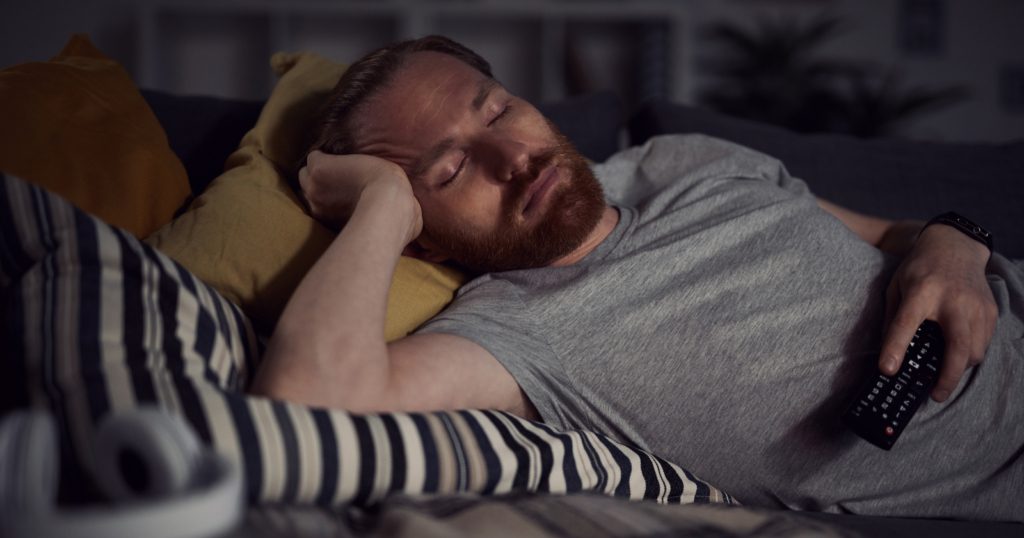
At 2:47 AM, Zara found herself lying in bed again, remote in hand, scrolling through Netflix for the third time that night. The house was completely silent except for the gentle hum of the air conditioner. She’d tried turning everything off an hour ago, determined to finally break her habit of falling asleep to television. But within minutes, her mind had started racing – replaying that awkward conversation with her boss, worrying about her mother’s upcoming doctor visit, questioning whether she’d made the right choice moving to this new city.

The silence felt suffocating. So here she was again, bathed in the blue glow of her bedroom TV, letting the familiar voices of a sitcom she’d seen dozens of times wash over her racing thoughts.
Zara isn’t alone. Millions of people rely on television, podcasts, or background noise to fall asleep each night, and psychology suggests the reason runs much deeper than simple habit or preference.

The Real Psychology Behind Needing TV to Sleep
Sleep experts and psychologists have discovered that our need for background noise during bedtime often stems from something more complex than just wanting familiar sounds. When we finally lie down and the world goes quiet, that’s precisely when our minds become most active.
“During the day, we’re constantly distracted by work, social interactions, and endless tasks,” explains Dr. Jennifer Martinez, a sleep psychologist at the Stanford Sleep Medicine Center. “But when everything goes silent at night, that’s when all the thoughts and emotions we’ve been avoiding suddenly demand our attention.”

The television becomes what researchers call a “cognitive buffer” – a barrier between our conscious mind and the deeper thoughts we haven’t processed. The flickering screen and familiar dialogue create just enough mental stimulation to prevent our brains from diving into that uncomfortable space of self-reflection.
This phenomenon affects different people in various ways, but the underlying mechanism remains surprisingly consistent across age groups and backgrounds.

What Science Tells Us About Sleep and Avoidance
Research from sleep laboratories has revealed fascinating patterns about how our brains behave when we’re trying to avoid processing difficult emotions or thoughts. Here’s what studies have found:
- Cognitive avoidance increases at bedtime: Our natural defenses are lower when we’re tired, making unwanted thoughts more likely to surface
- Background noise reduces intrusive thinking: Even low-level audio stimulation can redirect our brain’s attention away from internal worries
- Familiar content works best: Shows or sounds we know well require less active attention while still providing distraction
- Blue light paradox: Despite disrupting sleep quality, screen light can temporarily reduce anxiety by maintaining alertness
- Emotional regulation: People with higher stress levels are more likely to need background stimulation for sleep

| Sleep Pattern | Percentage of Adults | Primary Reason |
|---|---|---|
| Need TV/audio to fall asleep | 42% | Avoid racing thoughts |
| Wake up with TV still on | 28% | Fear of middle-of-night silence |
| Can’t sleep in complete silence | 35% | Anxiety about unprocessed emotions |
| Use sleep timers regularly | 31% | Want distraction without all-night stimulation |
Dr. Michael Chen, a behavioral sleep specialist, notes that this isn’t necessarily a disorder: “What we’re seeing is a coping mechanism. For many people, the TV serves as a transitional object – similar to how children use blankets or stuffed animals for comfort.”
The Deeper Truth About Silence and Emotional Processing
The real issue isn’t the television itself, but what happens when we consistently avoid those quiet moments where genuine emotional processing occurs. Throughout our busy days, we’re masterful at staying one step ahead of difficult feelings – grief we haven’t fully experienced, relationship concerns we haven’t addressed, career dissatisfaction we haven’t acknowledged.
Bedtime silence forces a confrontation with these avoided emotions. The mind, no longer occupied with external demands, naturally turns inward. For many people, this feels overwhelming or frightening.
“Think of it like emotional debt,” explains Dr. Sarah Kim, a clinical psychologist specializing in sleep disorders. “During the day, we keep borrowing against our emotional energy, pushing feelings aside to function. At night, when the distractions stop, our psyche tries to collect on that debt.”
This explains why the content of what people watch matters less than the simple presence of external stimulation. Whether it’s a cooking show, true crime documentary, or childhood cartoon, the specific program is less important than its ability to keep our attention focused outward rather than inward.
The challenge is that while this strategy provides short-term relief, it can prevent the natural emotional processing that typically occurs during quiet pre-sleep periods. This processing is actually crucial for mental health and stress management.
Finding Balance Between Comfort and Healthy Sleep
Understanding the psychology behind needing TV to sleep doesn’t mean everyone should immediately force themselves into silent bedrooms. Instead, it’s about recognizing what’s really happening and making conscious choices about how to address it.
Some people benefit from gradually reducing their dependence on screen-based distraction, perhaps switching to audio-only content or using sleep timers. Others find that addressing their daytime stress and emotional processing needs reduces their nighttime avoidance behaviors.
The key insight is recognizing that your need for background noise at bedtime might be telling you something important about your emotional life. Rather than judging this habit, consider what thoughts or feelings you might be avoiding, and whether there are healthier ways to process them during your waking hours.
“The goal isn’t to eliminate all comfort mechanisms,” notes Dr. Martinez. “It’s to understand what purpose they’re serving and ensure they’re helping rather than hindering your overall well-being.”
For many people, this awareness alone can be transformative – turning an unconscious habit into a conscious choice and opening up possibilities for both better sleep and better emotional health.
FAQs
Is it bad to fall asleep with the TV on?
It’s not inherently harmful, but it can disrupt sleep quality due to light and sound, and may prevent natural emotional processing that occurs in quiet moments.
How can I gradually reduce my dependence on TV for sleep?
Try switching to audio-only content first, then nature sounds, and gradually reduce volume over time while addressing daytime stress.
Does this mean I have anxiety or depression?
Not necessarily. Many mentally healthy people use background noise for sleep, though it can indicate you’re avoiding processing daily stress or emotions.
What’s the difference between this and just preferring background noise?
The key difference is whether you feel anxious or uncomfortable without it, and whether you’re aware of what thoughts arise in silence.
Should I force myself to sleep in complete silence?
No, forcing dramatic changes can increase anxiety. Focus first on understanding what emotions or thoughts you might be avoiding during quiet moments.
Can this habit affect my relationships?
It might, especially if you’re consistently avoiding processing relationship concerns or emotions that could benefit from conscious attention and communication.