
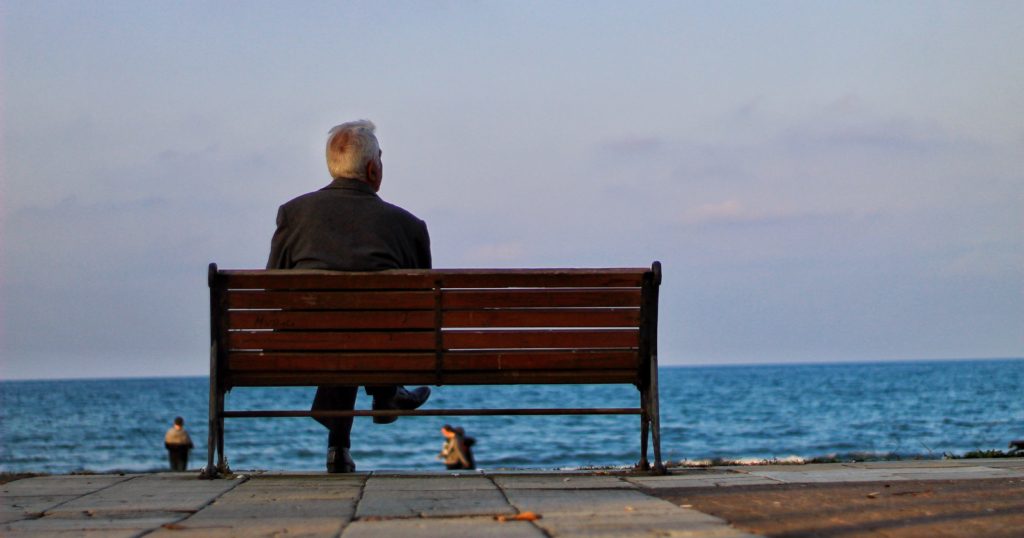
Eighty-two-year-old Thao Nguyen sits at her kitchen table every evening at 6 PM, waiting for a phone call that rarely comes. The woman who spent decades working double shifts to put three children through college now heats up single-serving frozen meals while her family members scroll through their phones in houses across the city.

“I planted so many trees,” she whispers to her neighbor, gesturing toward the family photos lining her mantelpiece. “But somehow, I’m the one eating the fruit alone.”
Her words echo an ancient Vietnamese proverb that’s taking on new meaning in modern psychology: “When eating fruit, remember the one who planted the tree.” The cruel irony? Research shows that the very generation that planted the most trees—our elders who sacrificed everything for their families—are now the most likely to dine in solitude.

Why Gratitude Gets Lost Between Generations
This contradiction reveals something deeply uncomfortable about how gratitude actually works in families. While we teach children to say “thank you” for cookies and toys, we struggle with the weightier gratitude owed to those who shaped our entire existence.
Dr. Susan Chen, a family psychologist at Stanford, explains it simply: “Gratitude fatigue is real. When someone has given you everything—your education, your values, your foundation—the debt feels so enormous that many people unconsciously avoid it rather than engage with it.”

The bigger the sacrifice, the harder it becomes for the next generation to face it directly. It’s easier to stay busy than to sit with the weight of what our parents gave up for us.
— Dr. Susan Chen, Family Psychologist at Stanford

The Vietnamese proverb assumes a simple transaction: plant tree, enjoy fruit, remember planter. But psychology reveals that gratitude doesn’t flow as naturally as we’d like to believe, especially when the gifts were sacrifices we never asked for.
Modern research shows that older adults, particularly those from immigrant families, experience what experts call “invisible loneliness”—surrounded by the fruits of their labor but emotionally isolated from those they worked to nurture.

The Numbers Tell a Heartbreaking Story
The statistics around elder isolation paint a stark picture of how gratitude gaps play out in real life:
| Age Group | Meals Eaten Alone Daily | Weekly Family Contact |
|---|---|---|
| 65-74 years | 68% | 2.3 times |
| 75-84 years | 74% | 1.8 times |
| 85+ years | 81% | 1.2 times |
These numbers become even more striking when you consider the cultural backgrounds involved:
- Asian-American elders report 40% higher rates of eating alone compared to their adult children
- First-generation immigrants are 60% more likely to experience “gratitude isolation”
- Parents who worked multiple jobs to support families show the highest rates of social isolation in later years
- Adult children report feeling “overwhelmed” by their parents’ sacrifices 73% of the time
Dr. Maria Rodriguez, who studies intergenerational relationships, notes that this isn’t about ungrateful children. “It’s about emotional overwhelm. When you realize your mother worked three jobs so you could go to college, the gratitude feels so massive that people freeze rather than act on it.”
We’ve created a culture where saying ‘thanks for dinner’ feels manageable, but saying ‘thanks for sacrificing your dreams for mine’ feels impossible. So we avoid the conversation entirely.
— Dr. Maria Rodriguez, Intergenerational Relationships Researcher
When the Tree Planters Sit Alone
The real tragedy isn’t that people are ungrateful—it’s that gratitude has become so overwhelming that it paralyzes connection instead of fostering it.
Consider the typical immigrant parent story: working multiple jobs, learning a new language, giving up career dreams, all so their children could have opportunities they never had. The children succeed, often spectacularly. But instead of drawing families closer, this success can create an emotional chasm.
Adult children report feeling guilty about their easier lives, unsure how to honor sacrifices they can never repay. Meanwhile, parents who expected their sacrifices to create closer family bonds instead find themselves more isolated than ever.
Psychologist Dr. James Liu, who specializes in Asian-American family dynamics, sees this pattern repeatedly. “The parents planted trees expecting to share the fruit. Instead, they watch from a distance as their children enjoy the harvest, afraid to ask for the companionship they thought would naturally follow.”
The most successful children often struggle the most with gratitude because their success makes their parents’ sacrifices more visible, not less. The better their life, the more they understand what their parents gave up.
— Dr. James Liu, Asian-American Family Dynamics Specialist
This creates what researchers call “gratitude paralysis”—where the appropriate response feels so inadequate that people choose no response at all.
Breaking the Cycle of Grateful Distance
The solution isn’t more gratitude—it’s better gratitude. Instead of treating parental sacrifice as an unpayable debt, families can reframe it as an ongoing relationship.
Simple actions can bridge these gaps:
- Regular shared meals, even if it’s just takeout on a Tuesday
- Asking parents about their own dreams and interests, not just their sacrifices
- Creating new traditions that center the elder’s preferences
- Expressing gratitude in small, consistent ways rather than grand gestures
The Vietnamese proverb doesn’t actually require elaborate thank-you speeches. It asks for remembrance—the simple act of not forgetting where the fruit came from.
For Thao Nguyen, the breakthrough came when her daughter started bringing her grandchildren over not for special occasions, but for ordinary Wednesdays. “She doesn’t thank me for college anymore,” Thao says. “She just asks me to teach the kids how to fold dumplings. That’s better than thank you.”
Sometimes the greatest gratitude isn’t looking backward at the tree that was planted, but forward to the seeds still being shared.
FAQs
Why do adult children avoid spending time with parents who sacrificed for them?
It’s often not avoidance but overwhelm—the gratitude feels so enormous that people don’t know how to express it adequately, so they freeze up instead.
Is this pattern common across all cultures?
It’s most pronounced in immigrant families and cultures that emphasize parental sacrifice, but the basic dynamic appears across many family types.
What’s the difference between healthy and unhealthy gratitude?
Healthy gratitude creates connection and ongoing relationship, while unhealthy gratitude creates debt and distance.
How can families break out of gratitude paralysis?
Start small with regular contact and shared activities rather than trying to “repay” large sacrifices all at once.
Do parents actually want constant gratitude from their children?
Most parents prefer ongoing relationship and inclusion over formal expressions of gratitude for past sacrifices.
Why does success sometimes make family relationships harder?
Success can make parental sacrifices more visible and the gratitude debt feel larger, creating emotional distance instead of closeness.