
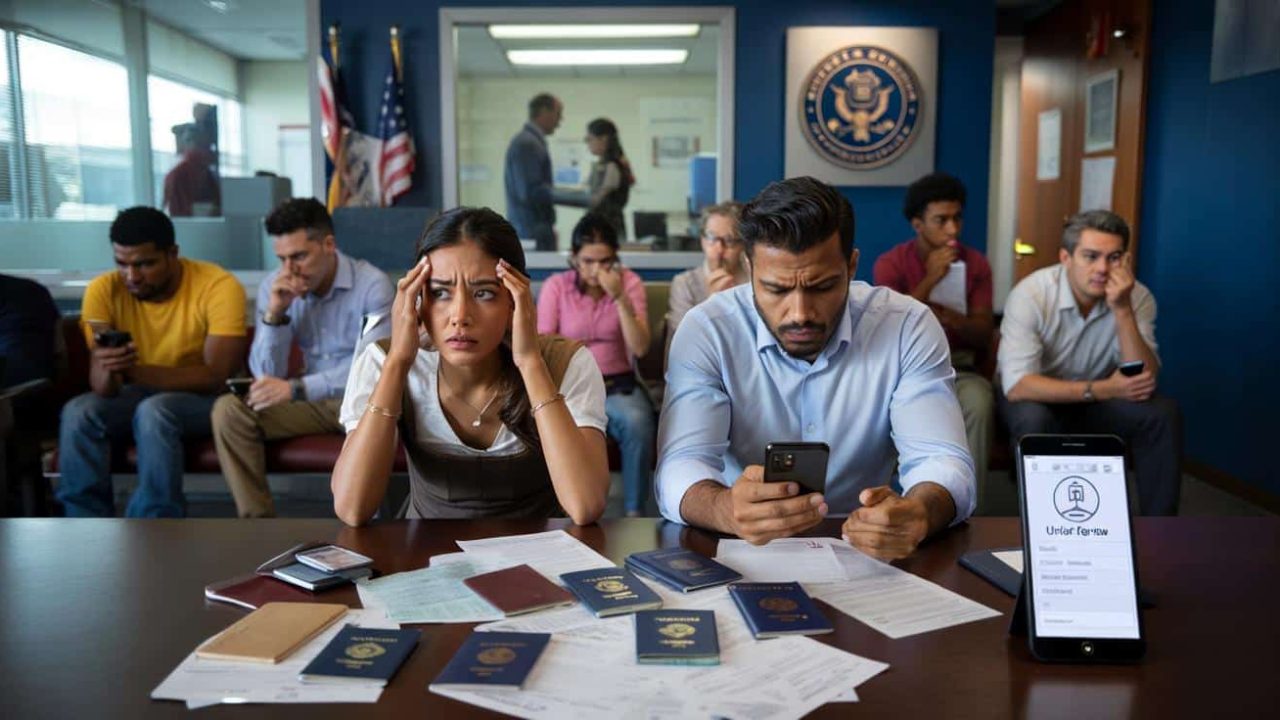
Rajesh Patel had been planning his family’s trip to India for months. The software engineer from Austin thought renewing his passport would be routine—just paperwork and waiting. Instead, his application disappeared into what felt like a digital black hole. No explanation. No timeline. Just silence from the State Department that stretched on for weeks.
“I called three times and got three different answers,” Patel recalls. “Finally, someone mentioned my name might have triggered an automatic security review. I couldn’t believe it.”
Patel isn’t alone. Across America, thousands of passport applicants are discovering that having certain names—particularly those that sound Middle Eastern, South Asian, or match entries on government watchlists—can trigger automatic delays that turn simple renewals into months-long ordeals.
When Your Name Becomes a Red Flag
The U.S. passport system uses automated screening technology that flags applications based on name matches with various government databases. These systems, designed to enhance national security, cast a wide net that frequently snares innocent Americans whose only crime is sharing a name with someone on a watchlist.
The process happens invisibly. Your application gets submitted, processed initially, then suddenly stops. No notification. No explanation. Just an indefinite hold while human reviewers manually examine your case.
This automated screening creates a two-tiered system where some Americans wait weeks for passports while others wait months, purely based on their names.
— Jennifer Martinez, Immigration Attorney
The delays aren’t random technical glitches. They’re systematic holdups affecting specific communities disproportionately. Muslim Americans, those with Arabic names, and people from South Asian backgrounds report significantly longer processing times.
Even American-born citizens with decades of travel history find themselves caught in these digital nets. The system doesn’t distinguish between a Chicago-born engineer named Ahmed and a potential security concern with a similar name halfway around the world.
The Hidden Mechanics of Passport Delays
Understanding why these delays happen requires looking at the layers of screening every passport application faces. Here’s what triggers automatic holds:
- Name matching algorithms that flag similar-sounding names
- Database cross-references with terrorism watchlists
- Previous travel patterns to certain countries
- Family connections to flagged individuals
- Social media screening for suspicious activity
The system’s sensitivity settings remain classified, but immigration attorneys report consistent patterns. Common Arabic names like Mohammed, Ahmed, or Hassan face routine delays. South Asian names including variations of Khan, Patel, or Singh also trigger frequent reviews.
| Processing Category | Average Wait Time | Percentage of Applications |
|---|---|---|
| Standard Processing | 6-8 weeks | 85% |
| Administrative Review | 12-16 weeks | 12% |
| Extended Security Check | 6+ months | 3% |
We’ve seen cases where identical twins applied on the same day, but only the one with a Middle Eastern middle name got delayed. The inconsistency is striking.
— David Chen, Civil Rights Advocate
The State Department acknowledges that additional security screening affects some applications but won’t discuss specific triggers or criteria. This opacity leaves applicants guessing why their renewal that should take six weeks has stretched into its fourth month.
Real Families, Real Consequences
Behind every delayed application is a disrupted life. Families miss weddings, funerals, and long-planned vacations. Business travelers lose opportunities. Students can’t start study abroad programs.
Fatima Al-Rashid, a nurse from Portland, missed her sister’s wedding in Jordan after her passport renewal took five months. “I had to watch my only sister get married over FaceTime,” she says. “No one could tell me why it took so long.”
The financial impact compounds the emotional toll. Non-refundable flights, cancelled hotel reservations, and lost deposits add up quickly. Some families report losing thousands of dollars while waiting for delayed passports.
Business consequences can be even more severe. Consultants miss client meetings. Researchers can’t attend conferences. International business deals fall through because key personnel can’t travel.
These delays don’t just inconvenience people—they can derail careers and damage America’s business relationships globally.
— Sarah Kim, International Business Consultant
College students face particular hardships. Study abroad programs have specific start dates that can’t be postponed. Missing these deadlines means losing entire semesters and academic opportunities.
The psychological impact shouldn’t be overlooked either. Many affected individuals report feeling like second-class citizens, questioned and delayed despite being born in America or naturalized decades ago.
Fighting Back Against the System
Some relief exists for those caught in extended delays. The State Department offers expedited processing for documented emergencies, though qualifying can be challenging.
Legal advocacy groups are pushing for greater transparency in the screening process. They argue that applicants deserve to know why their cases are delayed and deserve reasonable timelines for resolution.
Congressional representatives can sometimes intervene on behalf of constituents, though success varies widely. Some offices report good cooperation from the State Department, while others struggle to get basic information.
The system needs accountability. People shouldn’t have to guess why their government is delaying their fundamental right to travel.
— Michael Thompson, Congressional Liaison
Technology improvements could help reduce false positives, but implementing better screening systems requires balancing security concerns with civil liberties—a challenge that goes far beyond passport processing.
For now, affected individuals must navigate a system that treats them as potential threats until proven otherwise, often without explanation or reasonable timelines for resolution.
FAQs
Can I find out why my passport application is delayed?
The State Department rarely provides specific reasons for delays, citing security concerns.
How long can these security reviews take?
Reviews typically last 12-16 weeks, but some cases extend beyond six months with no guaranteed endpoint.
Does expedited processing help with security delays?
Expedited service doesn’t bypass security screening, so flagged applications still face the same delays.
Can I appeal or challenge a delayed application?
No formal appeal process exists, though congressional intervention sometimes helps resolve cases.
Will changing my name help avoid future delays?
Name changes don’t guarantee faster processing and may actually trigger additional scrutiny.
Are certain passport agencies faster than others?
Security screening happens centrally, so different agencies won’t help avoid name-based delays.