
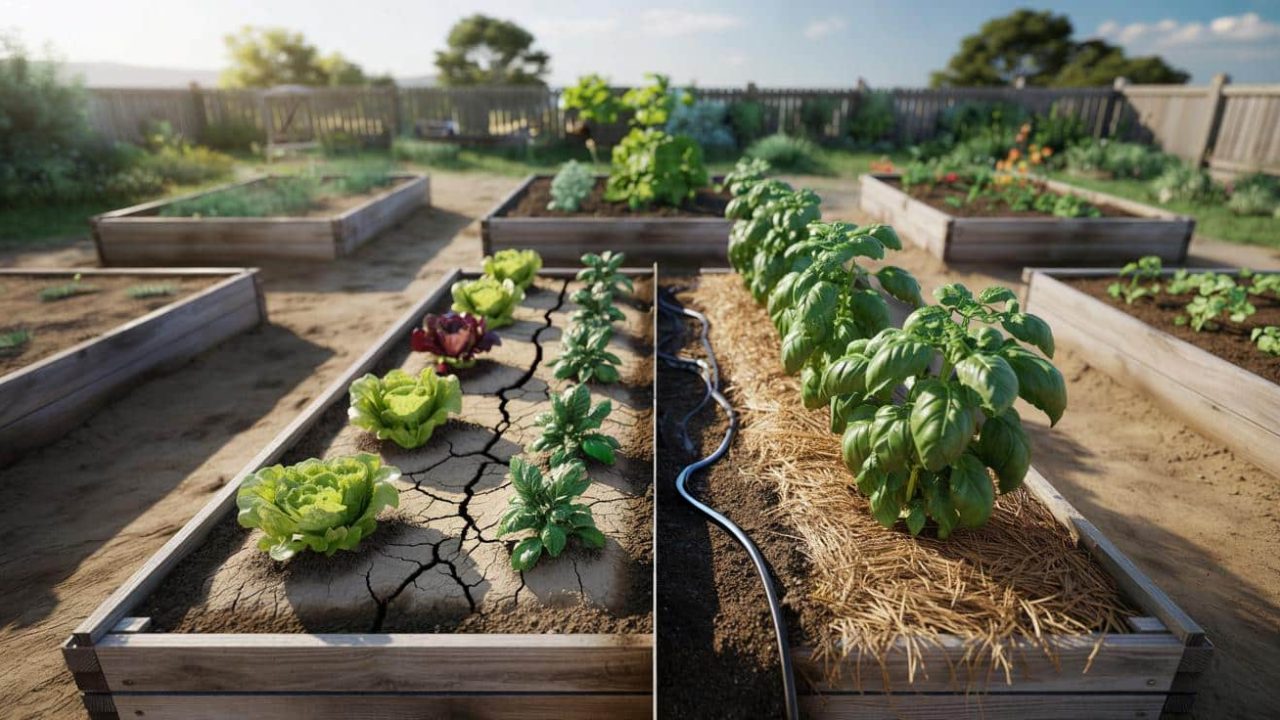
Marcus had been so proud when he finally built those raised garden beds last spring. The 78-year-old retired teacher spent weeks researching designs, carefully selecting cedar boards, and filling them with what he thought was the perfect soil mix. But by mid-July, he found himself watering twice a day, watching his tomatoes wilt despite his constant attention.
“I don’t understand it,” he told his neighbor over the fence. “My old ground-level garden never needed this much water.” What Marcus didn’t realize was that he’d stumbled into one of gardening’s most common frustrations—and one that has a surprisingly simple explanation.
Raised beds dry out faster than traditional gardens, and it’s not your imagination. There’s real science behind why your plants seem perpetually thirsty, and more importantly, there are proven ways to fix this problem for good.
Why Your Raised Beds Turn Into Plant Deserts
The primary reason raised beds dry out so quickly comes down to exposure. Unlike ground-level gardens where soil stays cool and moist thanks to the surrounding earth, raised beds are essentially giant containers sitting above ground level.
Think about it this way: your raised bed soil is exposed to air on all sides, not just the top. Wind hits the sides of your beds, sun beats down from above, and there’s no underground moisture source to draw from. It’s like the difference between keeping water in a buried pot versus one sitting on your deck.
The biggest mistake I see is people treating raised beds like regular gardens when it comes to watering. The drainage and exposure are completely different, so your watering strategy needs to be different too.
— Jennifer Martinez, Extension Horticulturist
But exposure isn’t the only culprit. Most gardeners fill their raised beds with store-bought soil mixes that drain faster than native soil. While good drainage prevents root rot, it also means water passes through quickly instead of staying available for plant roots.
The height of your beds matters too. Taller beds dry out even faster because there’s more surface area exposed to wind and sun. A 12-inch bed will stay moist longer than a 24-inch bed, all other factors being equal.
The Complete Fix: Building Long-Term Moisture Success
Solving the dry-bed problem isn’t about watering more—it’s about creating a system that holds moisture naturally. Here are the most effective long-term solutions:
Soil Amendment Strategy
- Mix compost into your existing soil at a 1:3 ratio (one part compost to three parts current soil)
- Add coconut coir or peat moss to increase water retention
- Work in vermiculite, which can hold up to four times its weight in water
- Create a soil blend that’s 40% compost, 40% quality topsoil, and 20% moisture-retaining amendments
Mulching Game-Changers
- Apply 3-4 inches of organic mulch like straw, shredded leaves, or wood chips
- Keep mulch 2 inches away from plant stems to prevent pest issues
- Refresh mulch mid-season as it decomposes
- Consider living mulches like creeping thyme between larger plants
I tell my clients that mulch is like a blanket for your soil. It keeps moisture in and temperature swings out. Most people don’t use nearly enough.
— David Chen, Landscape Designer
Smart Watering Infrastructure
| Method | Water Efficiency | Setup Cost | Best For |
|---|---|---|---|
| Drip irrigation | Excellent | Medium | Large beds, frequent travelers |
| Soaker hoses | Good | Low | Rectangular beds, budget-conscious |
| Self-watering reservoirs | Excellent | High | Small beds, maximum efficiency |
| Ollas (buried pots) | Very good | Low | Individual plants, traditional method |
What This Means for Your Garden’s Future
The difference between a struggling raised bed garden and a thriving one often comes down to moisture management. When you solve the drying-out problem, you’re not just saving time on watering—you’re creating conditions where plants can actually thrive.
Better moisture retention means more consistent plant growth, higher yields, and less stress during hot weather. Your plants develop deeper, stronger root systems when they’re not constantly searching for water near the surface.
Once gardeners get their moisture management right, they usually see a 30-40% improvement in plant performance. It’s one of those changes that affects everything else in your garden.
— Sarah Williams, Master Gardener Coordinator
The financial impact adds up too. Consistent moisture means fewer plant replacements, lower water bills, and better harvests from vegetable gardens. Many gardeners find their water usage actually decreases once they implement these long-term solutions.
For gardeners in drought-prone areas, these strategies become even more critical. Water restrictions can make daily watering impossible, so having beds that naturally conserve moisture becomes essential for garden survival.
Timing Your Improvements
- Early spring: Add compost and soil amendments before planting
- Late spring: Install irrigation systems and apply mulch
- Mid-summer: Refresh mulch and check soil moisture retention
- Fall: Add more organic matter and plan next year’s improvements
The key is thinking of moisture management as an ongoing system rather than a one-time fix. Each improvement builds on the others, creating a garden environment that works with you instead of against you.
The most successful raised bed gardeners are the ones who understand they’re creating a mini-ecosystem. Every element—soil, mulch, watering, plant selection—needs to work together.
— Michael Rodriguez, Sustainable Agriculture Specialist
Remember Marcus from our opening story? After implementing these changes, he went from watering twice daily to every other day, even during peak summer heat. His tomatoes produced better than ever, and he actually enjoyed gardening again instead of feeling chained to his watering can.
The solution isn’t about fighting your raised beds’ tendency to dry out—it’s about working with their unique characteristics to create a better growing environment for both plants and gardeners.
FAQs
How often should I water raised beds compared to ground gardens?
Raised beds typically need water 2-3 times more frequently than ground gardens, but this varies based on your soil mix, mulching, and weather conditions.
What’s the best mulch for retaining moisture in raised beds?
Organic mulches like straw, shredded leaves, or wood chips work best because they retain moisture while slowly decomposing to improve soil structure.
Can I add too much compost to my raised bed soil?
Yes, more than 50% compost can create drainage problems and nutrient imbalances. Aim for 30-40% compost mixed with quality topsoil and drainage materials.
How deep should my raised beds be to help with moisture retention?
8-12 inches is optimal for most plants and moisture management. Deeper beds dry out faster and require more soil amendments to maintain proper moisture levels.
Will a drip irrigation system work in raised beds?
Absolutely. Drip irrigation is actually ideal for raised beds because it delivers water directly to root zones and reduces evaporation from surface watering.
How do I know if my raised bed soil is retaining enough moisture?
Stick your finger 2-3 inches into the soil. It should feel slightly moist but not soggy. If it’s dry at this depth within 24 hours of watering, you need better moisture retention strategies.