
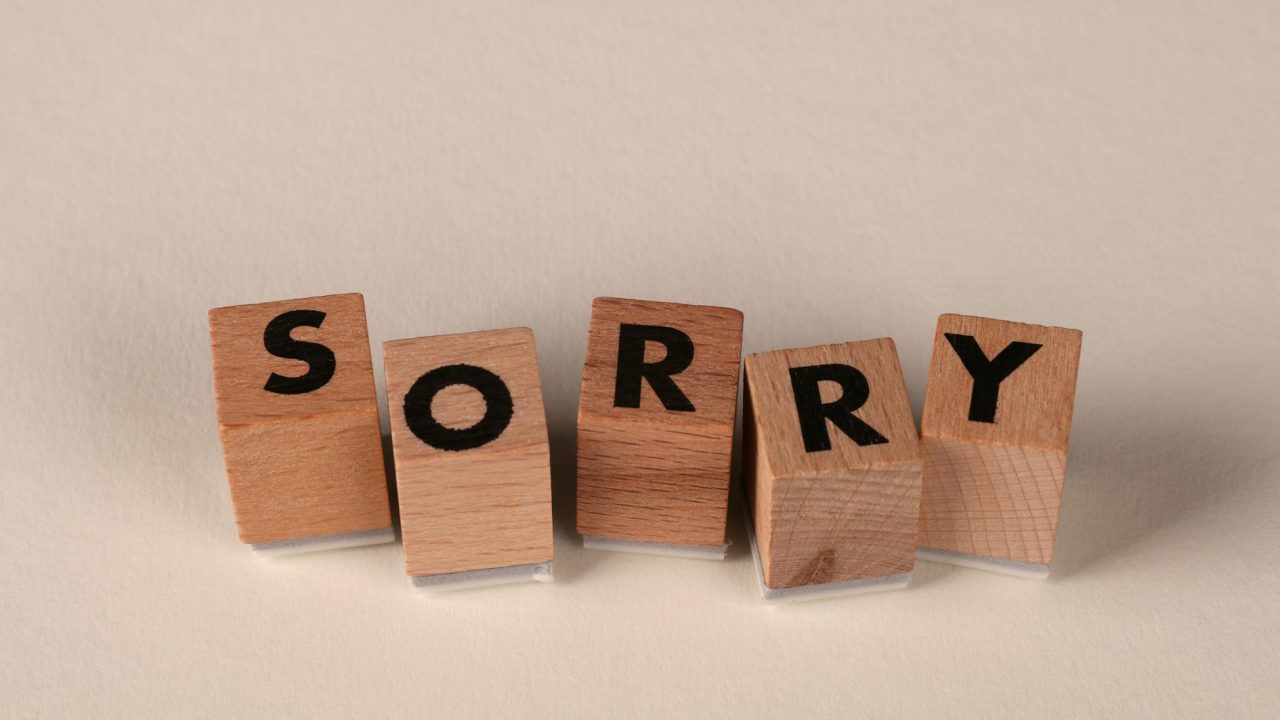
The conference room fell silent as Devon watched her manager’s face darken during the quarterly review meeting. Without thinking, the words tumbled out: “I’m sorry.” She hadn’t made any mistakes. The disappointing numbers weren’t her fault. Yet there she was, apologizing for something completely beyond her control.
Her colleague Marcus shot her a confused look afterward. “Why did you apologize? You crushed your targets this quarter.” Devon couldn’t explain it then, but that automatic “sorry” had been her default response to other people’s negative emotions for as long as she could remember.
Sound familiar? If you find yourself constantly apologizing for things that have nothing to do with you, psychology suggests there’s more going on than simple politeness.
The Hidden Psychology Behind Excessive Apologizing
When someone apologizes for everything from bad weather to another person’s mood, they’re not just being considerate. According to mental health professionals, this behavior often stems from childhood experiences where they learned to take responsibility for emotions that were never theirs to manage.
Children who grow up in households with emotionally volatile adults often develop what psychologists call “hypervigilance” around other people’s feelings. They become emotional caretakers, constantly scanning the room for signs of distress and immediately assuming they’re somehow responsible.
“These individuals learned early that someone else’s bad mood meant danger, criticism, or conflict was coming their way. Apologizing became a survival mechanism to defuse tension before it escalated.”
— Dr. Rachel Martinez, Clinical Psychologist
This pattern doesn’t disappear in adulthood. Instead, it shows up in workplaces, relationships, and social situations where the person continues to shoulder blame that isn’t theirs to carry.
The behavior often manifests in subtle ways. You might apologize when someone bumps into you, when the restaurant gets your friend’s order wrong, or when your partner has a stressful day at work. Each “sorry” reinforces the belief that you’re responsible for maintaining everyone else’s emotional equilibrium.
Recognizing the Signs and Patterns
Excessive apologizing goes beyond occasional politeness. It becomes a compulsive response that can actually harm relationships and self-esteem over time. Here are the key indicators that your apologies have crossed into unhealthy territory:
- Apologizing when someone else makes a mistake or has an accident
- Saying sorry for expressing your own needs or opinions
- Automatically apologizing when others seem upset, regardless of the cause
- Feeling guilty when you can’t fix someone else’s bad mood
- Apologizing for things completely outside your control, like weather or traffic
- Using “sorry” as a conversation starter or filler word
Research shows this behavior often develops alongside other people-pleasing tendencies. The same individuals who over-apologize frequently struggle with setting boundaries, saying no, and advocating for their own needs.
| Healthy Apologizing | Excessive Apologizing |
|---|---|
| Reserved for actual mistakes | Used for everything |
| Specific and brief | Vague and repetitive |
| Followed by corrective action | Often just empty words |
| Maintains personal boundaries | Erases personal boundaries |
| Acknowledges real harm | Assumes responsibility for others’ emotions |
“When we apologize for things that aren’t our fault, we’re essentially telling ourselves and others that we don’t deserve to take up space or have our own emotional needs met.”
— Dr. James Chen, Behavioral Therapist
The Real-World Impact on Relationships and Career
While excessive apologizers often believe they’re maintaining harmony, the opposite frequently occurs. Constant apologies can actually damage relationships and professional standing in several ways.
In romantic relationships, partners may become frustrated with the constant stream of unnecessary apologies. It can create an imbalanced dynamic where one person feels pressured to constantly reassure the other, leading to emotional exhaustion.
Professional consequences can be even more significant. Colleagues and supervisors may perceive excessive apologizing as a lack of confidence or competence. When you apologize for things beyond your control, you may inadvertently signal that you’re not ready for increased responsibilities or leadership roles.
The behavior also reinforces negative self-talk and low self-worth. Each unnecessary apology strengthens the neural pathways that tell you you’re somehow always at fault or not good enough as you are.
“I’ve seen clients miss out on promotions and healthy relationships because their excessive apologizing communicated insecurity rather than politeness. It becomes a self-fulfilling prophecy.”
— Dr. Angela Thompson, Workplace Psychology Specialist
Breaking Free From the Apology Trap
Recognizing this pattern is the first step toward change, but breaking decades of conditioning takes intentional effort and often professional support. The good news is that these habits can be unlearned with consistent practice.
Start by tracking your apologies for a week. Write down each time you say sorry and whether it was warranted. You might be surprised by how often you apologize for things completely outside your control.
Practice replacing unnecessary apologies with neutral statements. Instead of “Sorry for bothering you,” try “Thanks for your time.” Rather than “Sorry the weather is terrible,” simply acknowledge “It’s really coming down out there.”
Work on identifying your emotional triggers. Notice when you feel the urge to apologize and ask yourself: “What am I actually responsible for in this situation?” Often, the answer is nothing.
“Healing from this pattern requires learning that other people’s emotions are not your emergency. You can be compassionate without being responsible.”
— Dr. Sarah Kim, Trauma-Informed Therapist
For those with deeply ingrained patterns, therapy can provide valuable support in exploring the childhood experiences that created these responses and developing healthier communication strategies.
Remember, setting boundaries around your emotional energy isn’t selfish—it’s necessary for building authentic, balanced relationships where everyone takes responsibility for their own feelings and actions.
FAQs
Is it ever appropriate to apologize for someone else’s bad mood?
Only if you directly caused their mood through your actions. Otherwise, you can show empathy without taking responsibility.
How do I stop apologizing if it’s become an automatic response?
Start with awareness—track your apologies for a week, then practice pausing before speaking to consider if an apology is actually warranted.
Will people think I’m rude if I stop over-apologizing?
Genuine people will respect your boundaries. Those who expect you to constantly apologize may not have your best interests at heart.
Can excessive apologizing be a sign of deeper mental health issues?
It can be associated with anxiety, depression, and trauma responses. If it’s significantly impacting your life, consider speaking with a mental health professional.
How long does it take to break the habit of over-apologizing?
It varies by individual, but most people see improvement within a few months of consistent practice and awareness.
What should I say instead of unnecessary apologies?
Try “thank you,” neutral observations, or simply nothing at all. Not every situation requires a verbal response from you.