
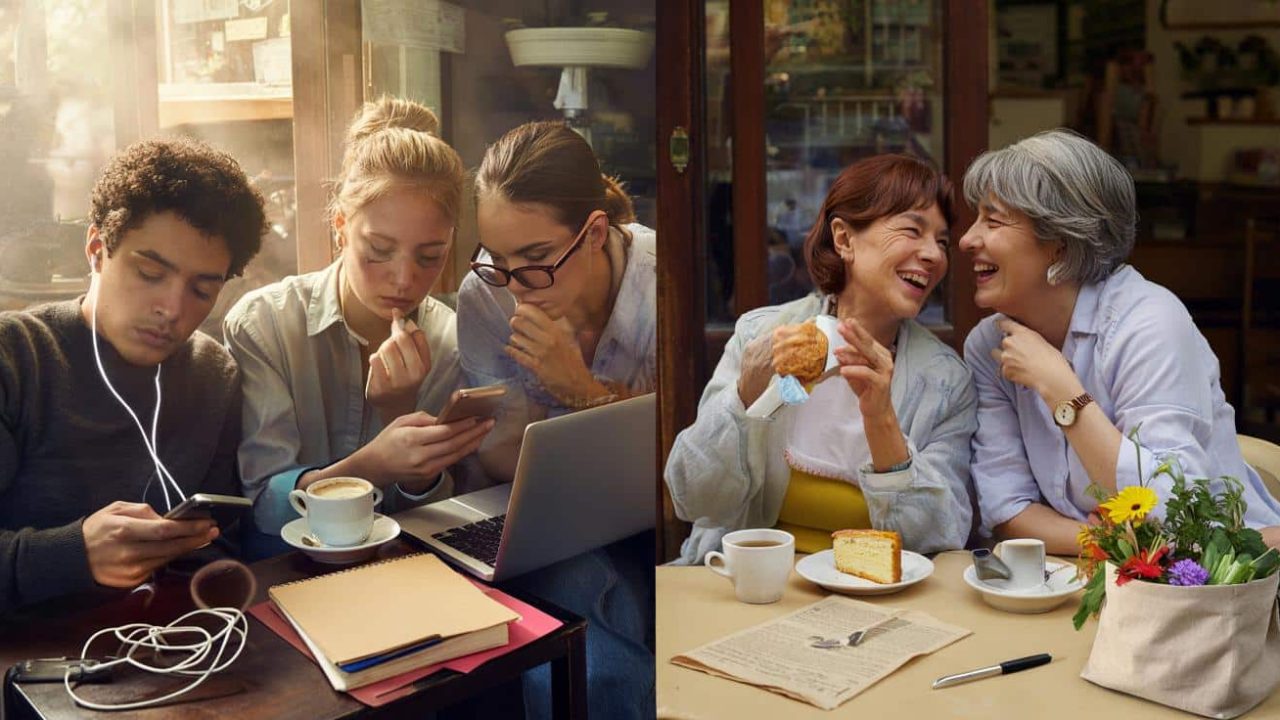
Eighty-two-year-old Vivian Chen still writes every grocery list by hand, despite her granddaughter’s repeated attempts to teach her smartphone apps. “You don’t understand,” she told me last week, her weathered hands carefully forming each letter. “This isn’t about being stubborn—it’s about staying connected to my thoughts.”
Her granddaughter rolled her eyes, muttering something about efficiency and cloud storage. But Vivian just smiled, folding her handwritten list with the same care she’s shown for decades.
Turns out, Vivian isn’t alone. Across the country, people in their 60s and 70s are quietly maintaining habits that younger generations find baffling, outdated, or downright frustrating. Yet these older adults insist these so-called “outdated” practices bring them a sense of peace and happiness that their tech-savvy descendants seem to be missing.
The Generational Divide Over Daily Rituals
What looks like resistance to change might actually be wisdom in disguise. While millennials and Gen Z race to optimize every aspect of their lives through apps, algorithms, and automation, their elders are holding onto practices that prioritize mindfulness, human connection, and genuine satisfaction over speed and convenience.
The tension is real. Adult children frequently express frustration when their parents refuse to embrace digital solutions that could “make life easier.” But research suggests these older adults might be onto something important about well-being that younger generations are overlooking in their rush toward technological efficiency.
The habits that seem inefficient to younger people often provide older adults with structure, purpose, and a sense of control that digital alternatives simply can’t replicate.
— Dr. Patricia Williams, Gerontologist at Stanford University
Nine Habits That Drive Younger Generations Crazy
Here are the specific behaviors that create the biggest generational friction, along with why older adults defend them so fiercely:
| Habit | Why They Keep It | What Young People Say |
|---|---|---|
| Handwriting everything | Better memory retention, mindful process | “Just use your phone!” |
| Reading physical newspapers | Deeper focus, less distraction | “It’s all online for free” |
| Using paper maps | Better spatial awareness, backup plan | “GPS is more accurate” |
| Paying bills by mail | Tangible record, personal control | “Auto-pay saves time” |
| Shopping in person | Social interaction, quality assessment | “Online is faster and cheaper” |
The remaining habits that create friction include maintaining landline phones, printing emails for filing, cooking without recipe apps, and keeping detailed appointment books instead of digital calendars.
- Landline loyalty: They want reliable communication that works during power outages
- Email printing: Physical documents feel more secure and permanent
- Traditional cooking: Recipes passed down through families carry emotional weight
- Paper calendars: Writing appointments by hand helps with memory and planning
My 74-year-old patients consistently report higher life satisfaction when they maintain these traditional practices alongside selective technology use, rather than abandoning them entirely.
— Dr. Marcus Rodriguez, Behavioral Psychologist
The Science Behind Their Stubborn Happiness
Research increasingly supports what these older adults intuitively understand. Handwriting activates different neural pathways than typing, leading to better comprehension and memory formation. Physical newspapers encourage deeper reading and critical thinking compared to skimming digital headlines.
The act of writing checks and balancing accounts manually provides a level of financial awareness that automatic payments can’t match. Many seniors report feeling more in control of their finances when they physically handle each transaction.
In-person shopping offers social interaction that becomes increasingly valuable with age. The casual conversations with cashiers, the ability to inspect products personally, and the gentle exercise of walking through stores contribute to both mental and physical well-being.
These habits create what we call ‘mindful friction’—small moments of intentional engagement that digital shortcuts eliminate, often at the cost of satisfaction and awareness.
— Dr. Sarah Kim, Cognitive Science Researcher
What Both Generations Can Learn
The real story isn’t about who’s right or wrong. Younger generations excel at leveraging technology for efficiency and connection. They’ve mastered skills that genuinely improve life quality in many areas.
But older adults have maintained practices that provide psychological benefits that pure efficiency can’t deliver. Their “slow” approach to daily tasks often includes built-in mindfulness, deeper processing, and meaningful rituals that create stability and satisfaction.
The healthiest approach might involve selective adoption from both sides. Older adults can benefit from certain technological tools while maintaining the traditional practices that serve their well-being. Younger people might discover that some “inefficient” habits actually enhance life quality in unexpected ways.
The goal shouldn’t be converting everyone to the same approach, but understanding why different methods work for different people at different life stages.
— Dr. Jennifer Liu, Intergenerational Studies Expert
Consider this: while young adults struggle with digital overwhelm, anxiety, and constant connectivity stress, many older adults who maintain these traditional habits report feeling more grounded, present, and content with their daily routines.
Maybe the question isn’t whether these habits are outdated, but whether our rush toward total digitization has left something important behind. The wisdom might lie not in choosing sides, but in recognizing that different approaches to daily life can coexist and even complement each other.
The next time you see an older adult writing a grocery list by hand or reading a physical newspaper, consider that they might not be behind the times—they might be protecting something valuable that the rest of us are too busy to notice.
FAQs
Why do older adults resist using smartphones for basic tasks?
Many prefer the reliability and simplicity of traditional methods, plus they value the mindful engagement these tasks provide.
Are handwritten lists actually better than digital ones?
Research shows handwriting improves memory retention and helps with planning, though digital lists offer convenience and accessibility.
Is it really safer to pay bills by mail?
While digital payments are generally secure, mailed payments give people more control and awareness of their spending habits.
Do physical newspapers provide better information than online news?
Physical newspapers encourage deeper reading and less distraction, though online sources offer more immediate updates and variety.
Should younger people adopt some of these traditional habits?
Selectively incorporating mindful practices like handwriting or in-person shopping can provide mental health benefits and reduce digital overwhelm.
How can families bridge this generational divide?
Respect each other’s preferences while staying open to learning why different approaches work for different people.