
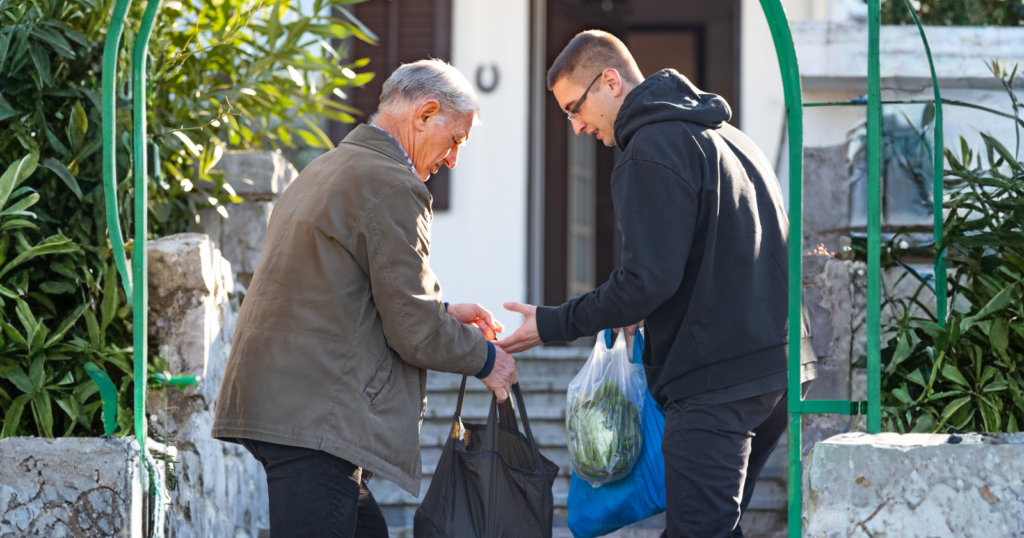
The shopping bags felt heavier than they should have. Evelyn stood at the base of the subway stairs, calculating whether she could make it to the top without stopping. That’s when Marcus, maybe twenty-five with kind eyes, stepped forward. “Can I help you with those?” he asked simply.
Her first instinct was to wave him off with a smile and a “No, thank you, I’m fine.” The words were already forming on her lips when something stopped her. She looked at the steep concrete steps, then at her own hands gripping the plastic handles, and realized something profound: saying no wasn’t about pride anymore. It was performance. And she was exhausted from performing strength she no longer had.
“Actually, yes,” she said, letting him take the heavier bag. “Thank you.”
When Accepting Help Becomes an Act of Courage
There’s a moment in many people’s lives when the script flips. The independence we’ve worn like armor suddenly feels more like a costume we’re tired of wearing. For women especially, admitting physical limitations often feels like surrendering something essential about who we are.
This shift happens gradually, then all at once. Maybe it’s arthritis making jar lids impossible. Perhaps it’s recovering from surgery and realizing your body has different rules now. Or it could simply be the accumulation of decades that makes stairs steeper and bags heavier than they used to be.
The hardest part isn’t the physical limitation itself—it’s letting go of the identity we’ve built around being the person who never needs help.
— Dr. Patricia Hernandez, Gerontologist
The performance of strength becomes a burden all its own. We develop elaborate strategies to avoid appearing vulnerable. We make multiple trips instead of asking for help. We skip activities rather than admit we need accommodations. We smile through pain because showing it feels like failure.
The Hidden Cost of Refusing Help
The physical toll of maintaining this performance often compounds the original problem. When we consistently push beyond our limits to avoid appearing weak, we risk injury, exhaustion, and delayed recovery from existing conditions.
Consider the real impact of refusing assistance:
| Situation | Performance Response | Actual Cost |
|---|---|---|
| Heavy lifting | Struggle alone | Risk of injury, muscle strain |
| Long walks | Push through pain | Joint damage, extended recovery |
| High shelves | Climb unsafely | Fall risk, emergency room visits |
| Technology issues | Avoid asking for help | Isolation, missed opportunities |
I see patients who’ve turned simple problems into major medical issues because they were afraid to ask for help early on.
— Dr. James Rodriguez, Physical Therapist
The emotional cost runs even deeper. Constantly performing strength we don’t have creates a disconnect between our authentic selves and the version we present to the world. This gap breeds loneliness, anxiety, and a persistent fear of being “found out.”
There’s also the missed opportunity for genuine connection. When we refuse help, we deny others the chance to be kind. We rob ourselves of moments that could build community and understanding.
Learning to Accept Grace
Accepting help isn’t giving up—it’s growing up. It’s recognizing that interdependence isn’t weakness; it’s humanity. Every person who has ever lived has needed assistance at various points. The strong aren’t those who never need help; they’re those who can accept it gracefully.
This realization often brings unexpected relief. The energy previously spent on performance can be redirected toward actually living. Activities become enjoyable again when we’re not constantly proving our capability.
There’s tremendous freedom in dropping the act. Suddenly you can focus on what you want to do rather than what you think you should be able to do.
— Lisa Chen, Occupational Therapist
The shift also opens doors to new relationships and experiences. When we’re honest about our limitations, we often discover others share similar struggles. Vulnerability becomes a bridge rather than a barrier.
Practical strategies for making this transition include:
- Starting small—accepting help with minor tasks first
- Reframing assistance as collaboration rather than charity
- Recognizing that helping others often brings them joy
- Setting boundaries about what help you do and don’t want
- Expressing genuine gratitude without over-apologizing
The Ripple Effect of Authenticity
When we stop performing strength we don’t have, we give others permission to do the same. This authenticity creates ripples that extend far beyond our individual experience.
Adult children often feel relief when parents finally admit they need support. Friends discover they can drop their own acts. Communities become more supportive when people are honest about their struggles.
Watching my mother finally accept help taught our whole family that needing support isn’t shameful—it’s normal.
— Robert Kim, Family Caregiver
This doesn’t mean becoming helpless or giving up all independence. It means choosing your battles wisely. Save your energy for what matters most. Accept assistance with the heavy bags so you can enjoy the conversation on the walk home.
The young man who offered to carry those shopping bags probably thought he was just being polite. He couldn’t have known he was offering something much more valuable: permission to stop pretending. Permission to be human. Permission to accept grace.
That moment at the subway stairs wasn’t about weakness. It was about wisdom—the wisdom to recognize when performance becomes prison, and the courage to walk free.
FAQs
How do I know when I’m performing strength versus actually being strong?
If accepting help feels scary because of what others might think rather than because you genuinely don’t need it, you’re likely performing.
What if people start treating me differently once I accept help?
Some might, but most people respect honesty and authenticity more than they respect stubborn independence.
How can I accept help without feeling like a burden?
Remember that most people genuinely enjoy helping others—you’re giving them an opportunity to feel useful and kind.
Is it okay to accept some help but not others?
Absolutely. You get to set boundaries about what assistance you want and don’t want.
What if I’ve been refusing help for so long that it’s awkward to start accepting it now?
People are usually understanding about changing needs, and a simple “I’m learning to accept help when I need it” explains everything.
How do I help someone who’s clearly struggling but won’t accept assistance?
Offer specific help rather than general offers, be patient, and respect their autonomy while staying consistently kind.